🎂 25% off all Brett Garsed books, sale already applied, no code necessary! 🎉


BOOK AND VIDEO PACKAGE
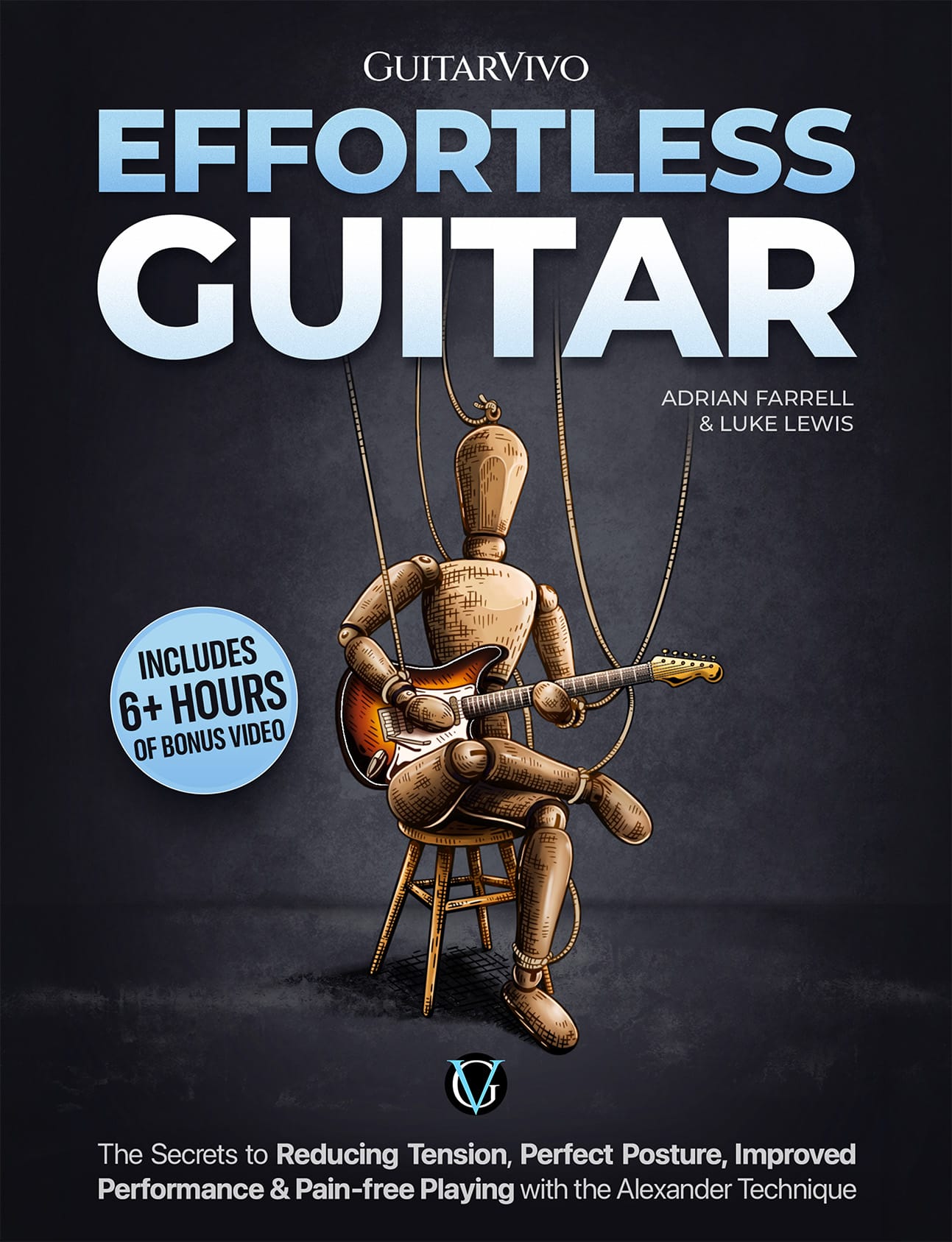
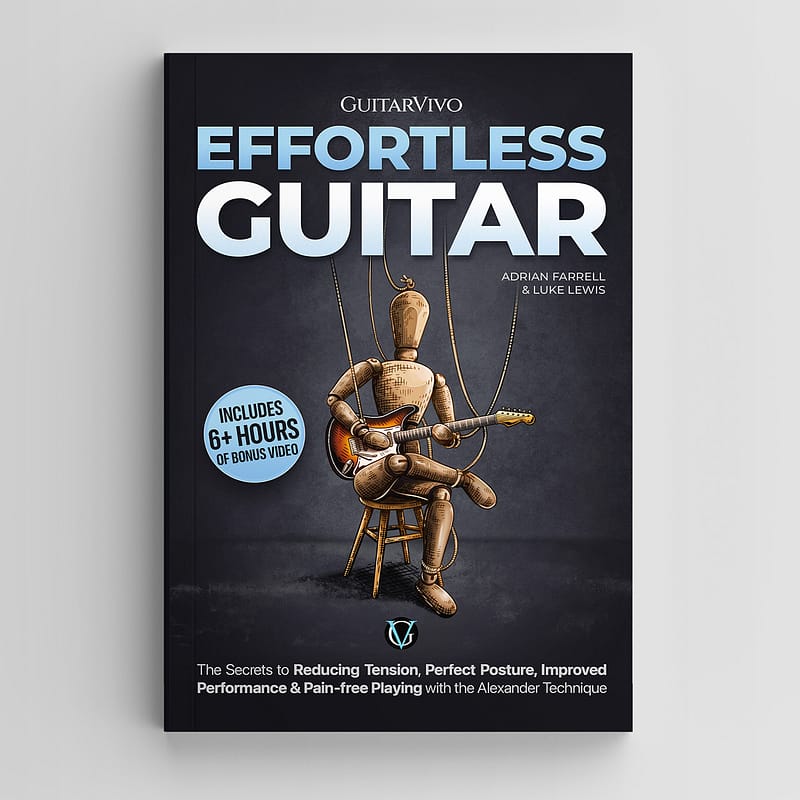
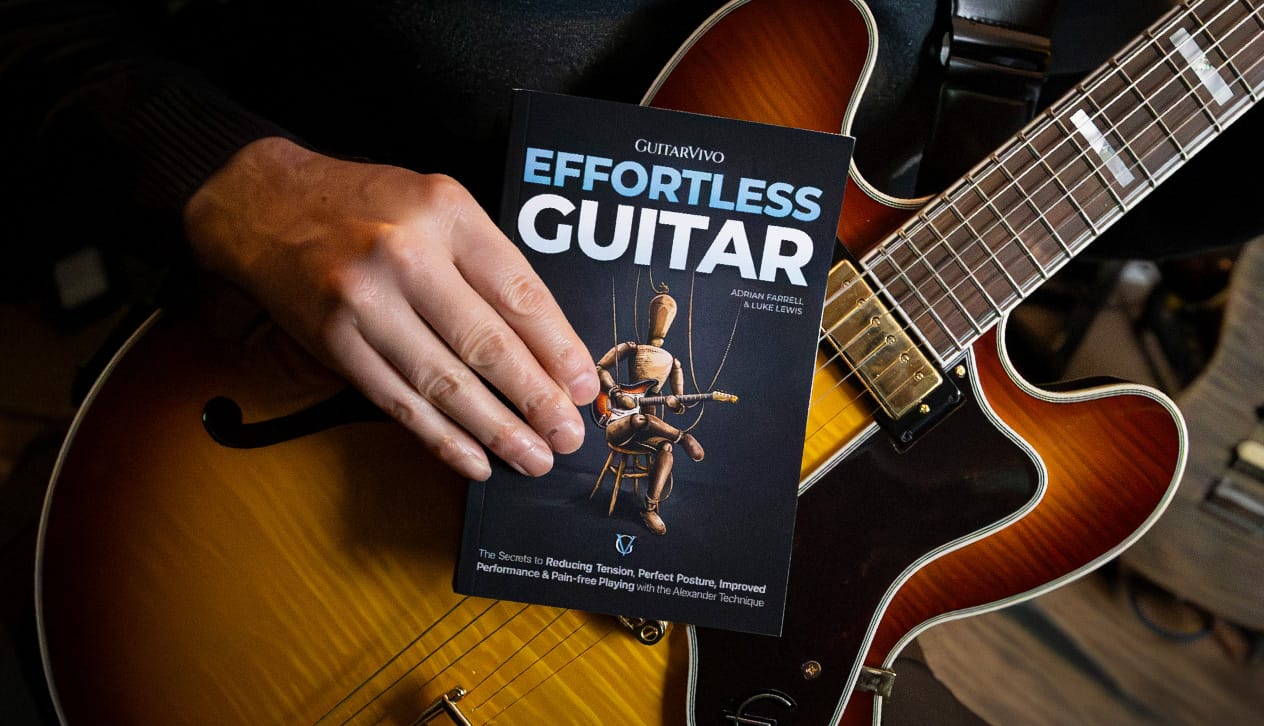
Effortless Guitar
By Adrian Farrell
$22.99 Original price was: $22.99.$19.99Current price is: $19.99.
Effortless Guitar reveals how to eliminate tension and pain using the Alexander Technique. Master physiological mechanics to improve your posture, speed, and accuracy across contemporary styles like rock, blues, and jazz for a lifetime of healthy playing.
220+ page book
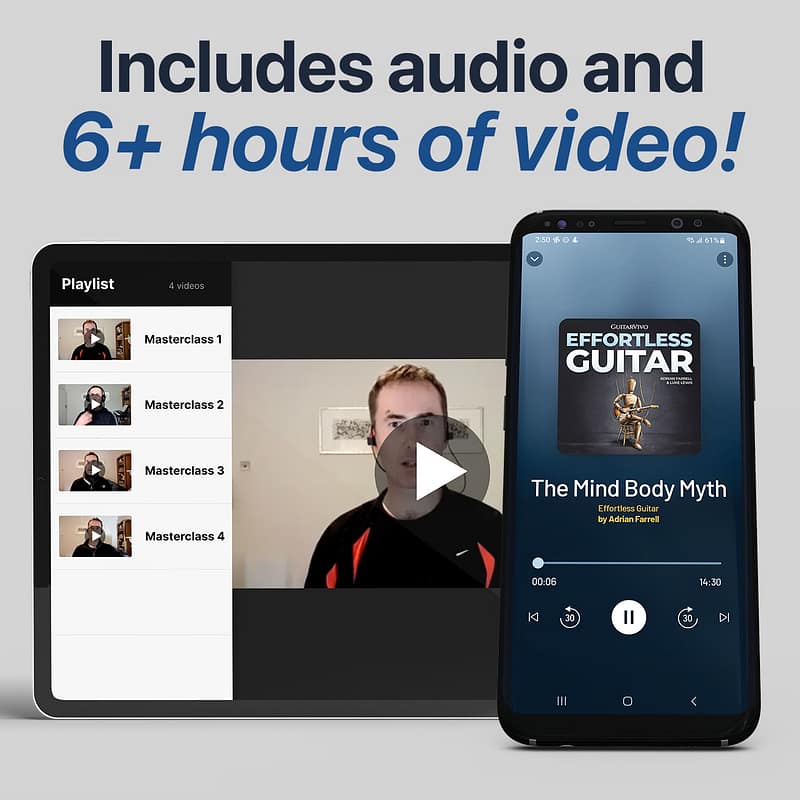
6+ hours of bonus video lectureses
Effortless insights on technique, tension reduction & posture
Strategies for managing stage fright & playing anxiety
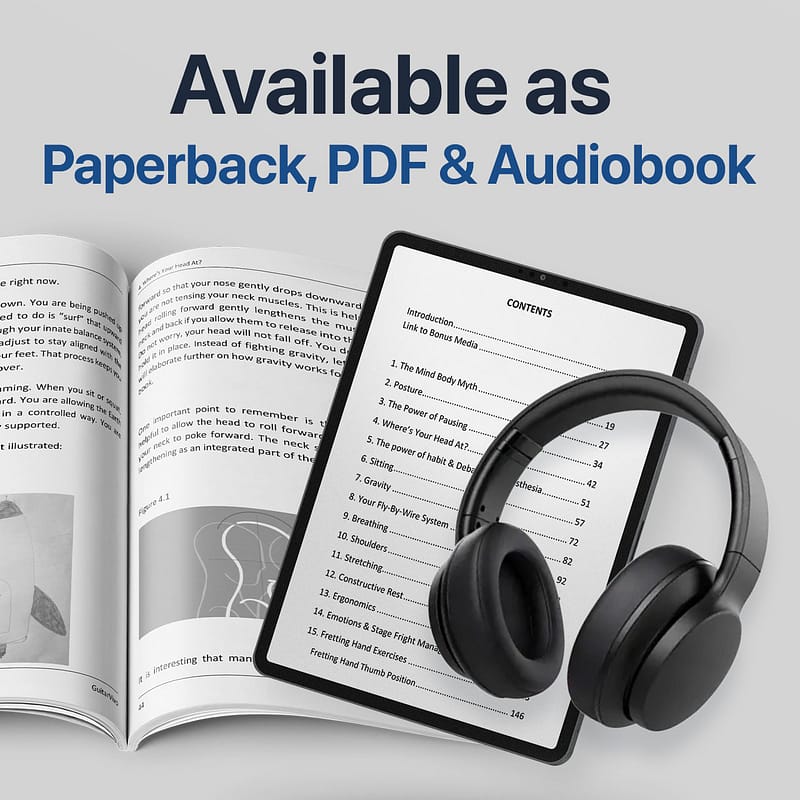
Optional paperback available
BUY MORE, SAVE MORE! 🚀

Discount is automatically applied at checkout!

William J. Wilson
August 22, 2024
Rediscovering My Guitar
After a two-year hiatus from performing, I was searching for a way to return to my instrument without pain and tension. "Effortless Guitar" was a revelation. The book's introduction to the Alexander Technique provided me with the tools to reduce tension, and reconnect with my guitar in a way that felt natural and sustainable. The techniques outlined in the book allow me to play longer and with much less pain, something I hadn't thought possible after my long break. The inclusion of video lectures and masterclasses was an added bonus, definitely worth the cost of admission.

Amazon Customer
February 16, 2023
Fantastic Book by a Brilliant Teacher
This book is a must-read for any guitarist who has experienced pain associated with playing and performance. As an Alexander Technique teacher myself, I work with many musicians--especially guitarists--who have struggled with tension and mis-use for years. Thanks to Adrian, there is finally a book that can address these issues. Effortless Guitar offers helpful tools to better understand how to get out of that pain cycle and play with ease and pleasure instead.
Mr R P
January 27, 2023
This book was exactly what I needed!
This book has already been tremendously helpful. Not only is it informative and easy to follow, but it is anecdotal and even humorous in places. Adrian Farrell is a true expert in his field.If you’re a guitarist currently experiencing even the slightest hint of back pain, I highly recommend considering Alexander Technique.
Take a Look
What you will learn 🎸
How to eliminate tension and effort for a more fluid playing experience.
Essential postural mechanics to ensure long-term, pain-free performance.
Contemporary technique insights to allow string bending, sweep picking, and legato with minimal effort.
Physiological secrets used by elite players like Julian Lage and Robert Fripp.
Effective management of stage fright, performance anxiety, and mental tension.
Safe practice habits to overcome or prevent injuries like Repetitive Strain Injury (RSI).
The Ultimate Guide To
Effortless Technique
Learn The Secrets To...
- Pain-free playing
- Reduce excess tension
- Sit, stand & move with balance and ease
- Fretting & picking mechanics
- Dynamic posture & poise
- Break bad habits
- Stage fright & performance anxiety
- Preventing repetitive strain injuries
✨ Bonus content: Over 6 hours of video lectures and masterclasses to help you visualize key concepts.
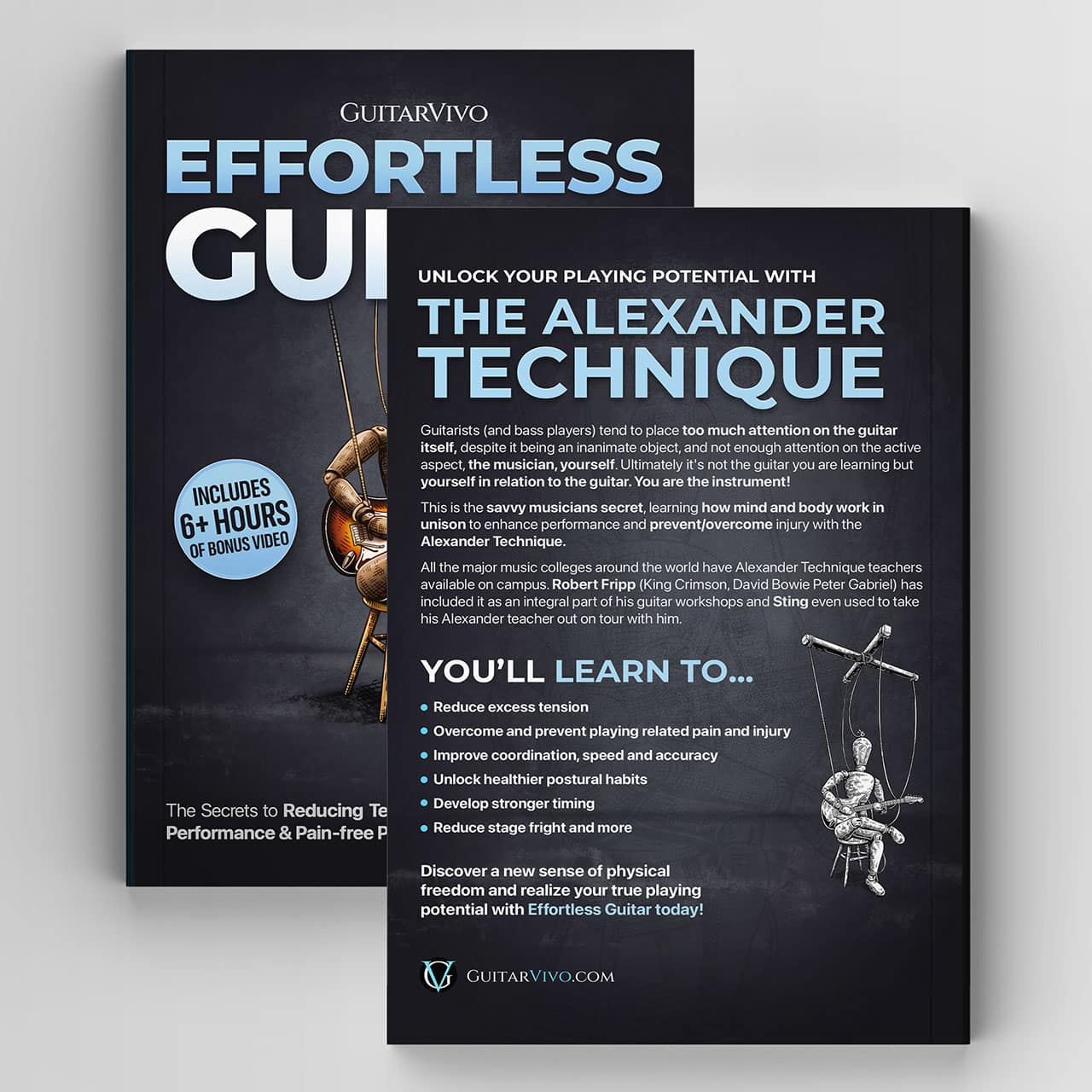
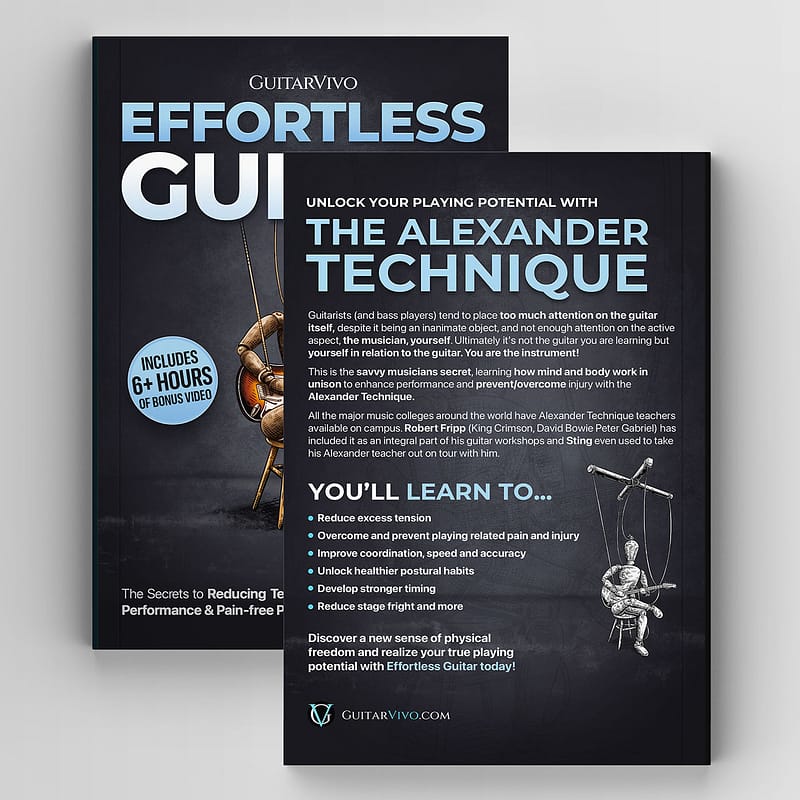
UNLOCK YOUR PLAYING POTENTIAL WITH
THE ALEXANDER TECHNIQUE!
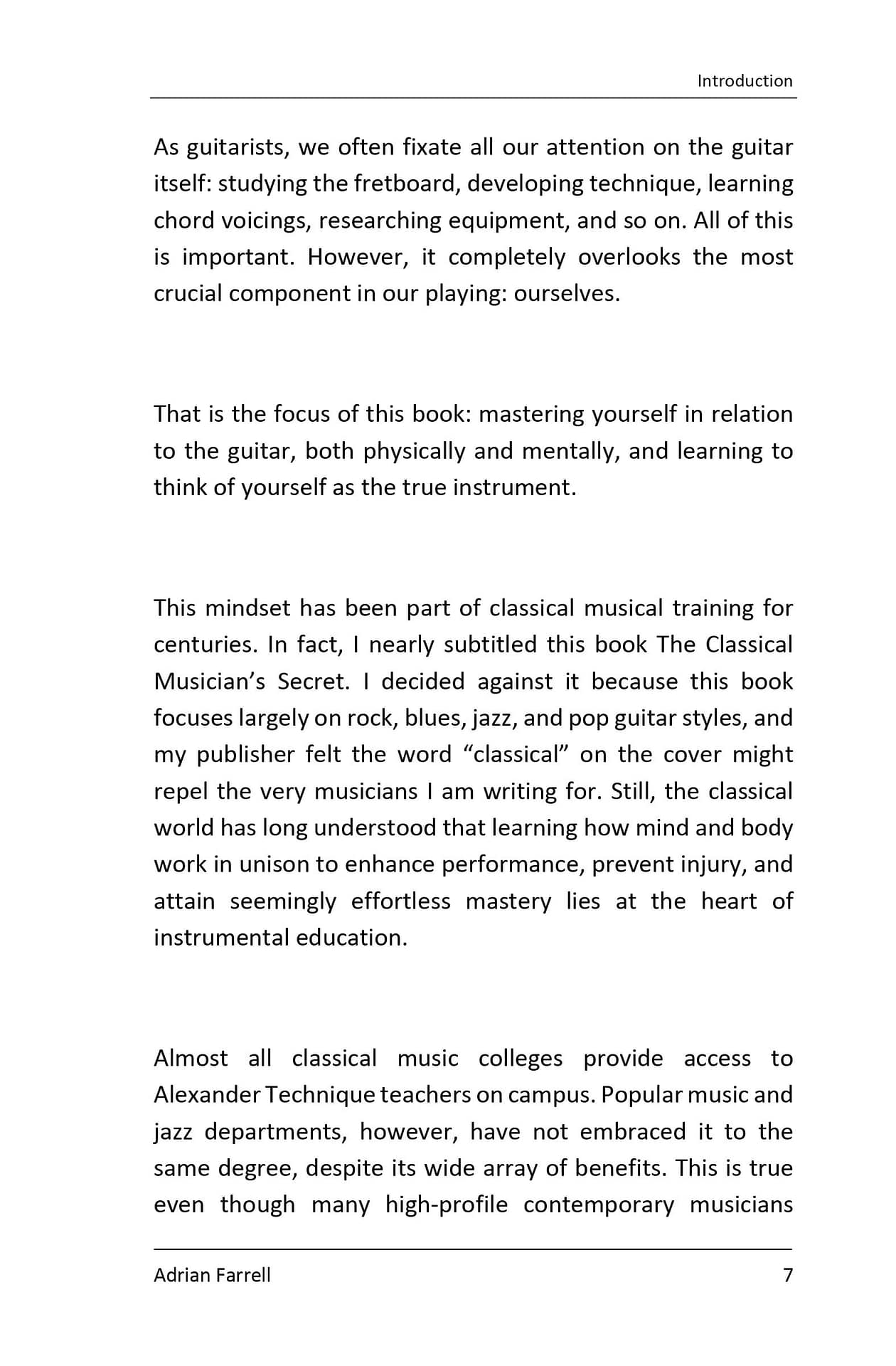
Guitarists (and bass players) tend to place too much attention on the guitar itself, despite it being an inanimate object, and not enough attention on the active aspect, the musician, yourself.
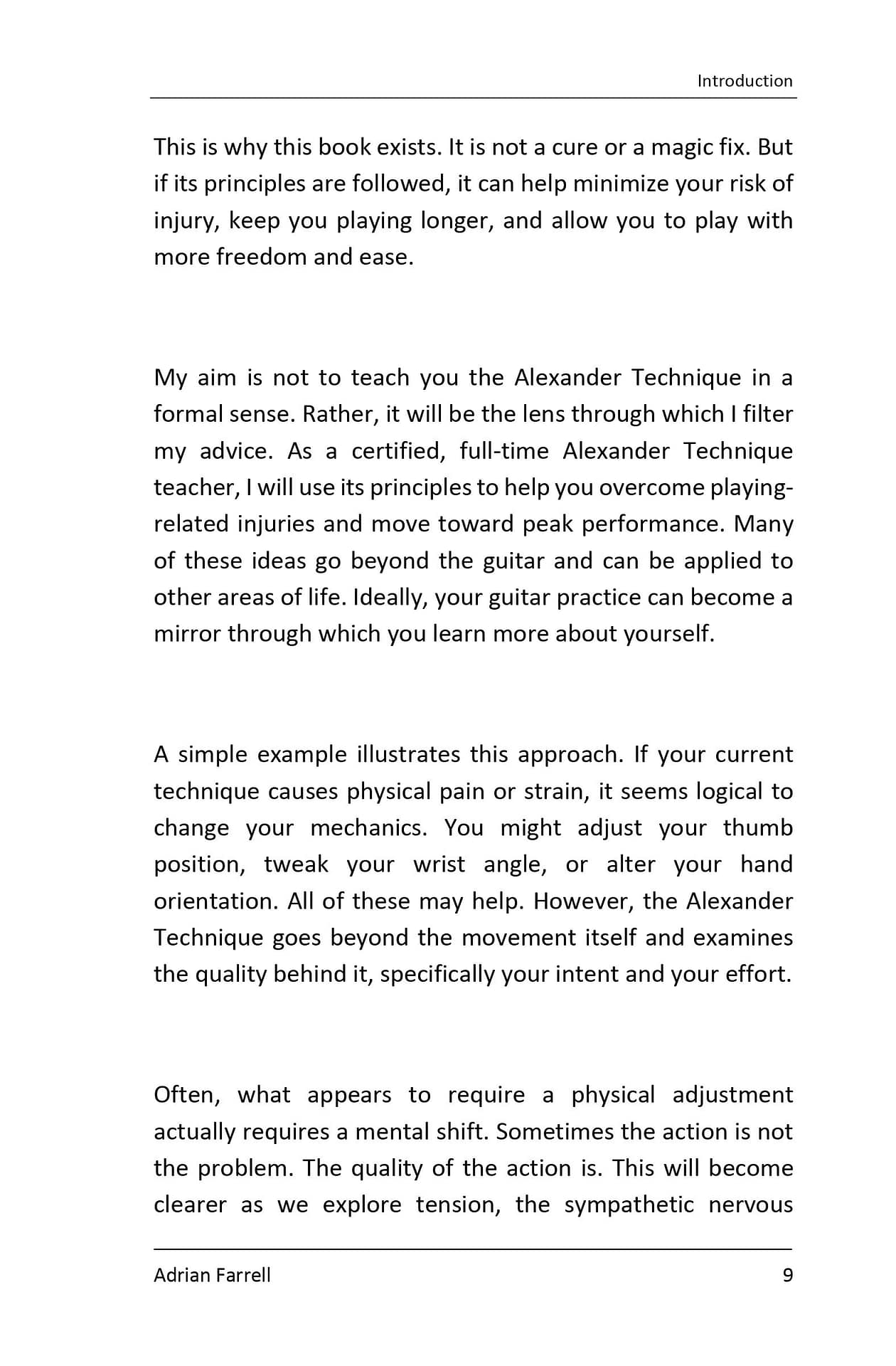
Ultimately it’s not the guitar you are learning but yourself in relation to the guitar. You are the instrument! This is the savvy musicians secret, learning how mind and body work in unison to enhance performance and prevent/overcome injury with the Alexander Technique.
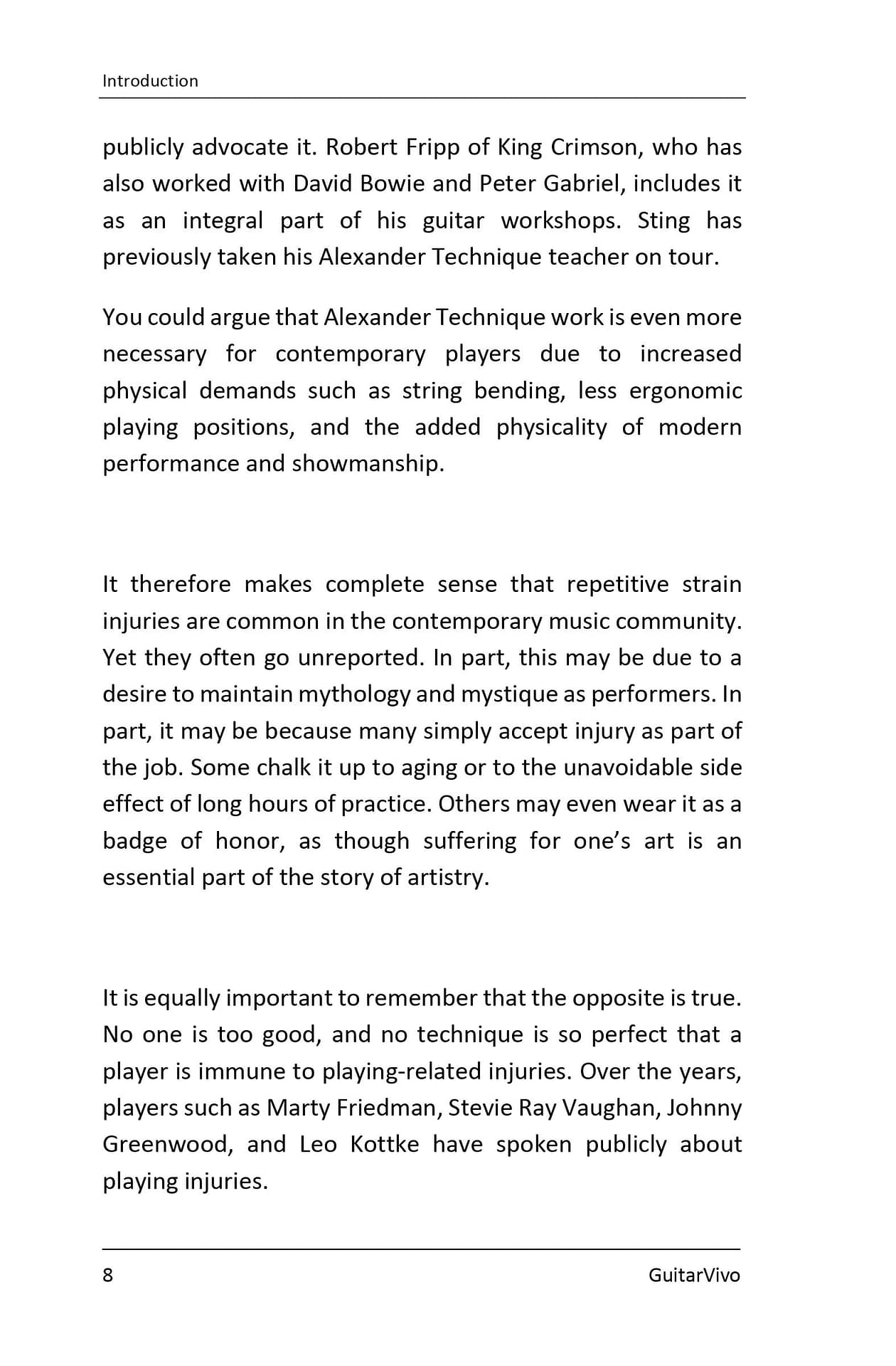
All the major music colleges around the world have Alexander Technique teachers available on campus. Robert Fripp (King Crimson, David Bowie Peter Gabriel) has included it as an integral part of his guitar workshops and Sting even used to take his Alexander teacher out on tour with him.
YOU'LL LEARN HOW TO...
✔ Reduce excess tension
✔ Overcome and prevent playing-related pain and injury
✔ Improve coordination, speed and accuracy
✔ Unlock healthier postural habits
✔ Develop stronger timing
✔ Manage stage fright and more
Discover a new sense of physical freedom and realize your true playing potential with Effortless Guitar today!
What Students are Saying
James Brimble
January 27, 2023
Brilliant Book
I'm a personal trainer and hobby guitarist, I found the physiological and psychological approaches to playing really interesting.
T. Smith
January 30, 2023
Informative and accessible
I’ve found this book really helpful to improve my playing, and to correct bad habits. Informative, but still in an accessible style.
Andrew Linch
January 29, 2023
Fantastic!
Full of unique and actionable insights that go way beyond just posture and tension. I was very surprised. A must read for all players
Amazon Customer
Dec 8, 2025
Extremely useful read
Great book. Very useful and interesting information.
Has made me think about the way I play and given me the push to make changes.
Ian
January 27, 2023
Great concept!
Having spent years in music education, I've seen a lot of guitar students who have had trouble with pain from practising for long periods of time without really understanding what's happening. So this book is a god-send!
Only just started reading 'Effortless Guitar', but it is already really useful and well written. Looking forward to finishing it and then recommending to the future generation of guitar students!
Matt L Davis
May 12, 2023
An excellent book on an important topic
This book should be an essential read for guitarists of any level - from the soft-fingered beginner through to the busiest of professionals. It highlights the importance of working with your body to improve your playing instead of introducing unnecessary forces and tensions that inevitably lead to pain and problems.As a self-taught player, it really helped me understand some of the bad habits that had built up over the years and how I could change them.The book is excellently written. Adrian clearly guides the reader through the Alexander Technique and how it can be applied to playing the guitar.
Meet your instructor
Adrian Farrell
Adrian is a lifelong guitarist and certified Alexander Technique teacher who specializes in helping players overcome and prevent playing-related injuries. By focusing on the body’s natural mechanics, he helps musicians eliminate the chronic tension that often cuts careers and progress short.
As a dedicated guitar coach, Adrian integrates physiological concepts with contemporary playing styles. His unique approach allows students to transcend mechanical obsessions, overcome performance anxiety, and develop a deeper, healthier relationship with their instrument.

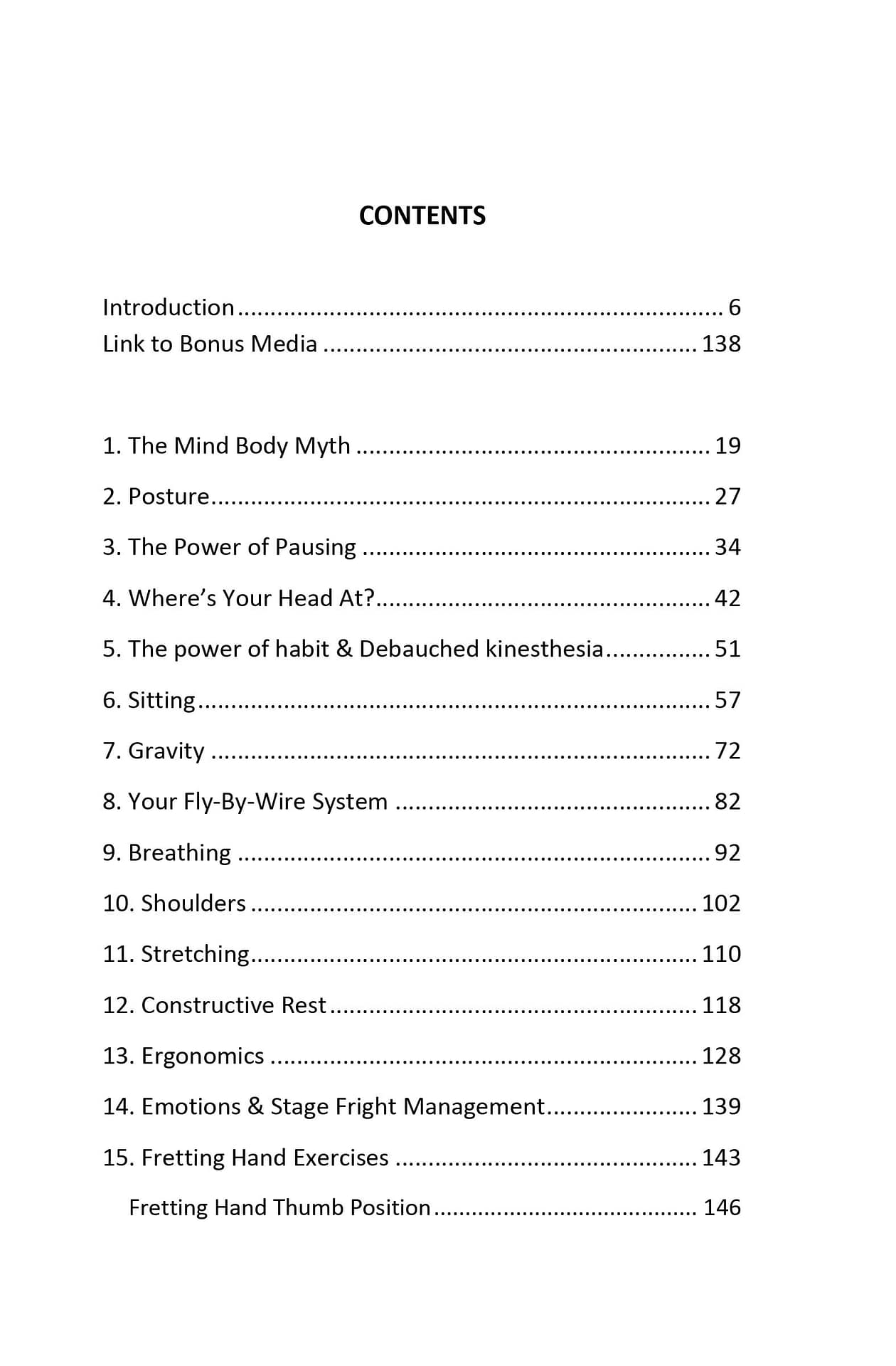
Complete Chapter Breakdown
Learn about each chapter with Adrian Farrell!
Look Inside
Click to Zoom


Course Overview
Check out exactly what you'll learn!
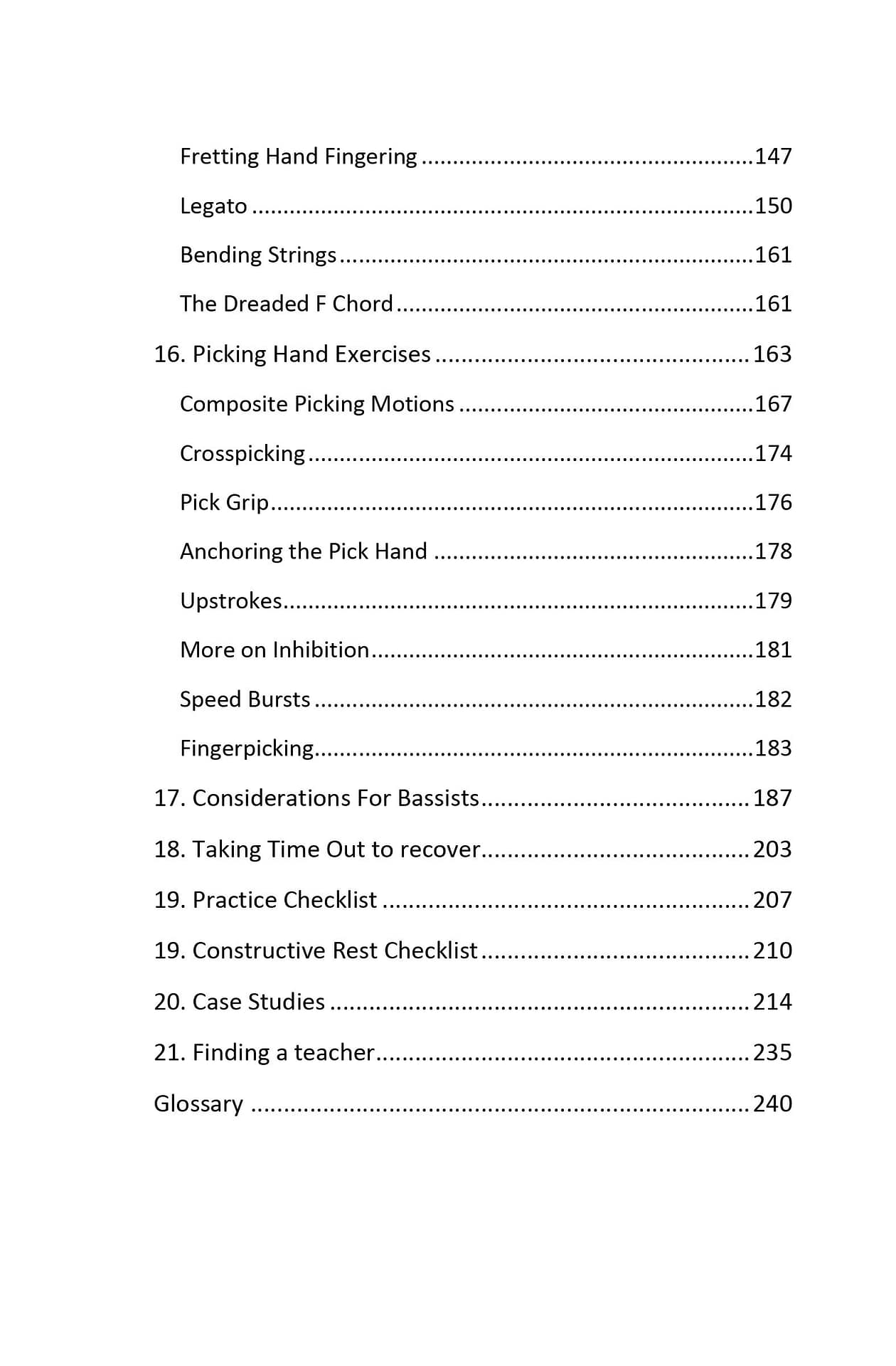
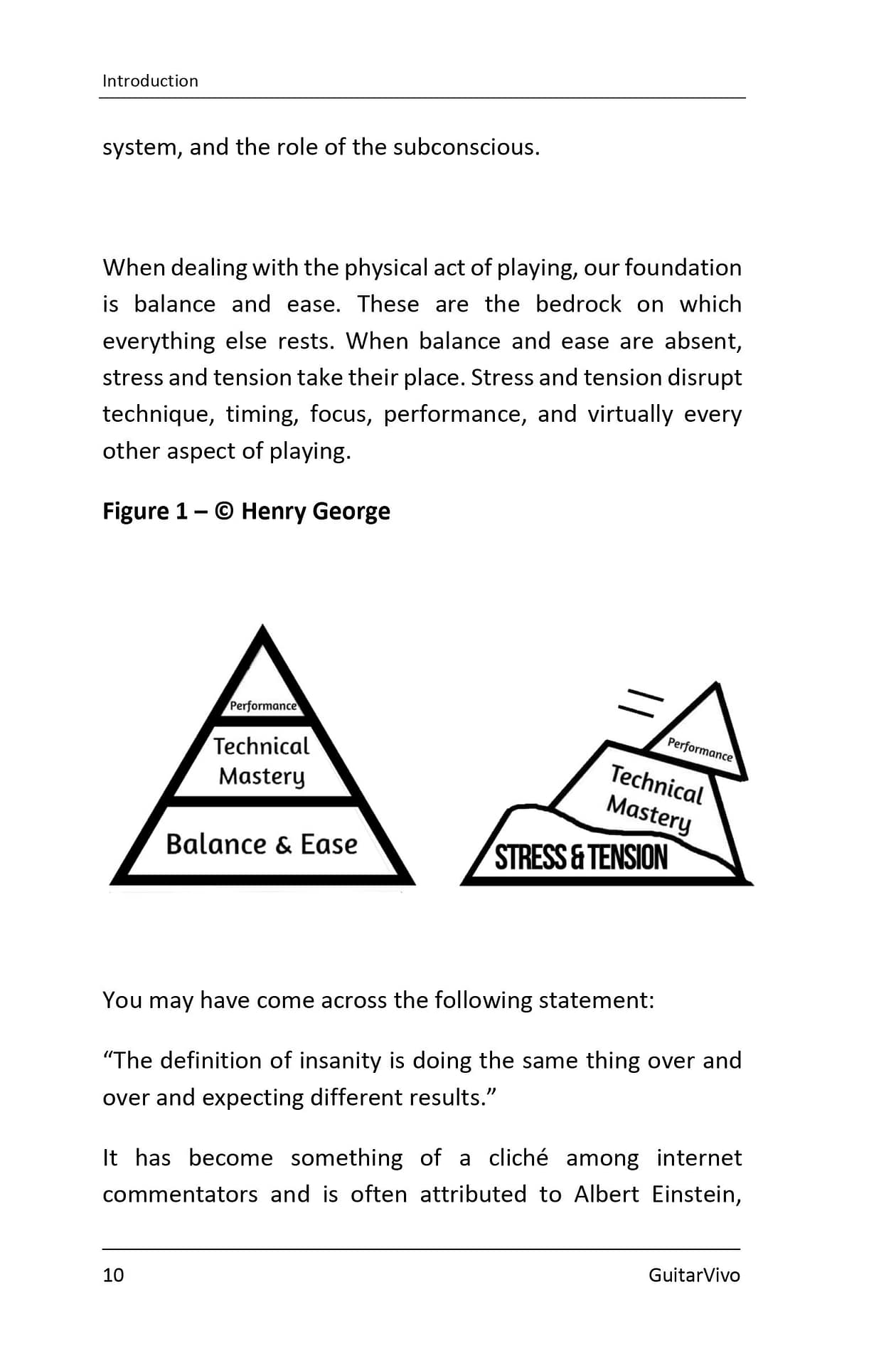
Introduction: You Are the Instrument
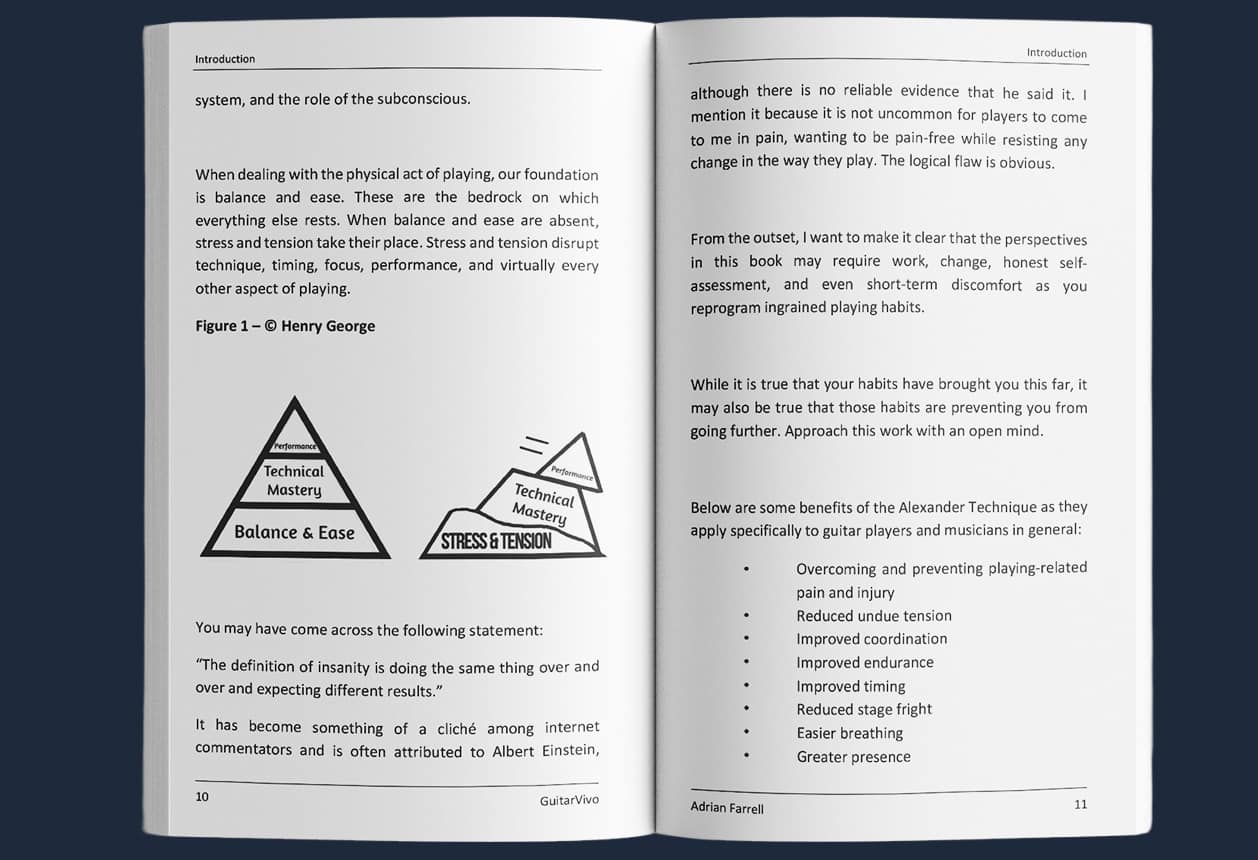
This book begins with a simple shift that changes everything: the most important “piece of gear” in your rig is you. Instead of chasing technique fixes in isolation, you’ll learn how mind and body work together to create ease, control, and better performance. You’ll discover why many common playing problems are really coordination problems. By the end of this introduction, you’ll know what “effortless” actually means and how to start moving toward it.
Chapter 1: The Mind Body Myth
Get clear on why playing guitar is always a whole-person activity, not a “hands-only” skill. You’ll learn how tension, pain, and inconsistency often come from the way you think and respond, not just what your fingers do. This chapter helps you build awareness without overthinking, so your technique can become more automatic and reliable. You’ll also start using simple questions that make your playing more intentional and musical.
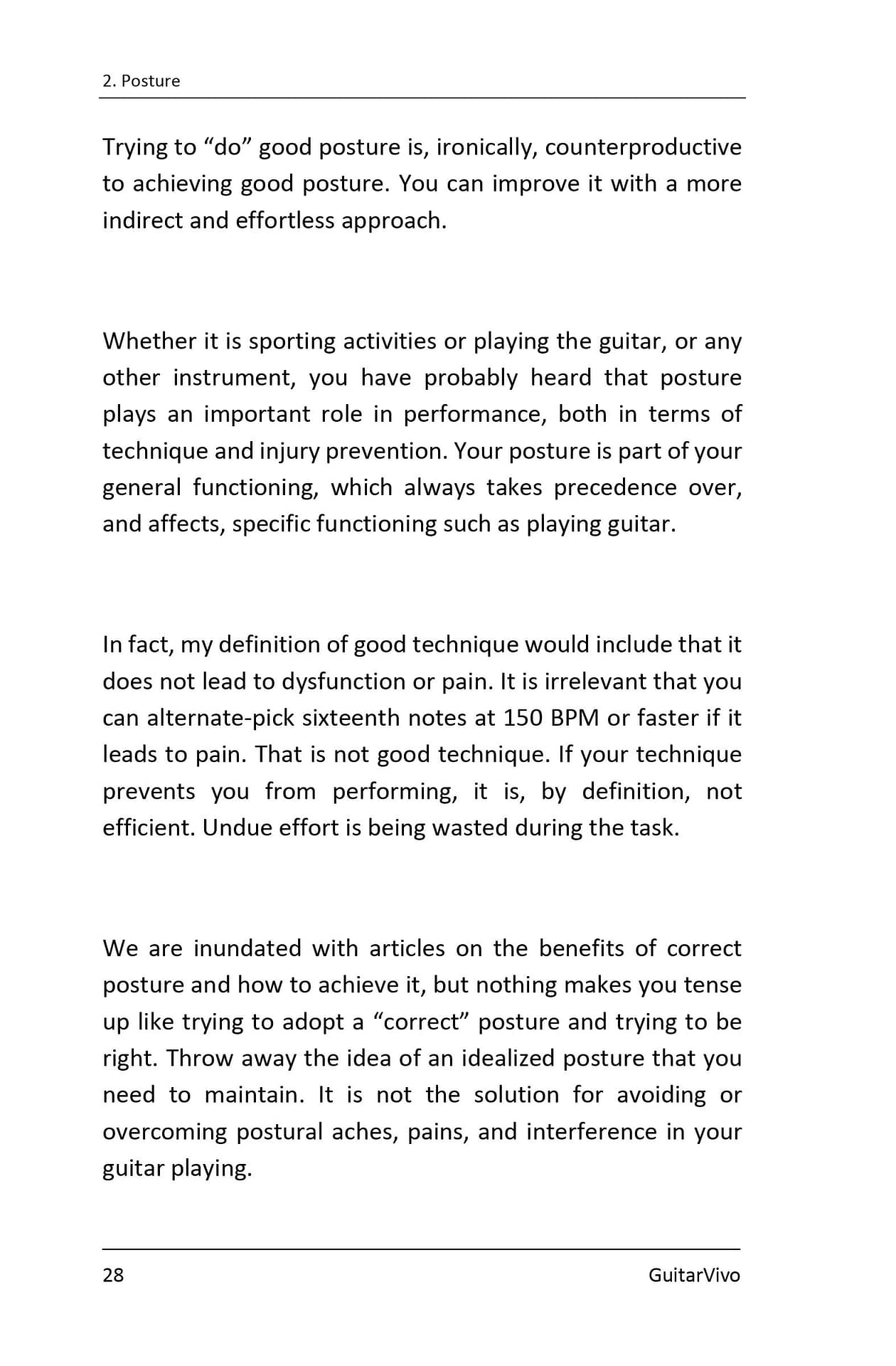
Chapter 2: Posture
Forget rigid “sit up straight” advice and learn a more natural, sustainable approach to posture that actually supports great playing. You’ll discover why trying to force a correct position often creates the very tension you’re trying to avoid. Instead, this chapter teaches you how to develop poise: a fluid, responsive coordination that keeps you free and balanced. Expect better endurance, smoother technique, and less fatigue—without bracing or effort.
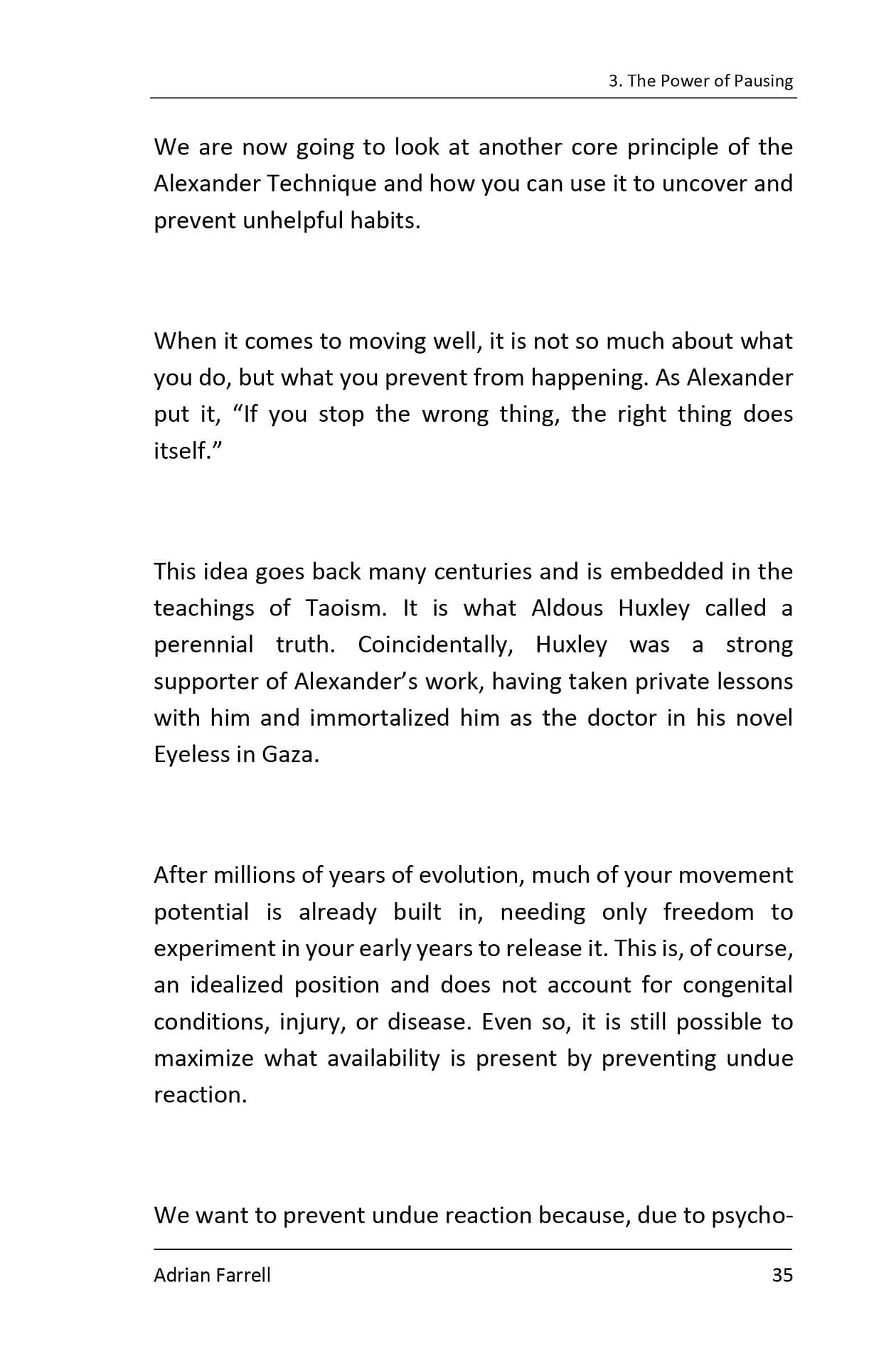
Chapter 3: The Power of Pausing
This chapter gives you one of the most practical tools in the whole book: learning to pause before you react. You’ll explore how small, unconscious “grabs” and effort spikes creep into your playing and build into bigger problems over time. By training a calm, non-reactive response, you’ll reduce tension at the source and play with more flow. It’s a simple skill that pays off in speed, control, and confidence.
Chapter 4: Where’s Your Head At?
Learn why the head-neck relationship is a powerful “dashboard gauge” for your entire technique. When the neck tightens, everything downstream tends to tighten too—hands, shoulders, breathing, timing, and focus. You’ll discover how attention pulls you physically toward the fretboard and how to counter that without stiffening up. This chapter helps you feel more centered, open, and coordinated, so the guitar stops bossing your posture around.
Chapter 5: The Power of Habit & Debauched Kinesthesia
Most players don’t struggle because they lack discipline—they struggle because their habits feel “right,” even when they’re inefficient. This chapter shows you why your internal sense of effort and alignment can be misleading, and how that makes change harder than it should be. You’ll learn to use reliable feedback (mirrors, filming, simple checkpoints) to recalibrate what ease feels like. The goal is freedom, not perfection, and this chapter sets that mindset.
Chapter 6: Sitting
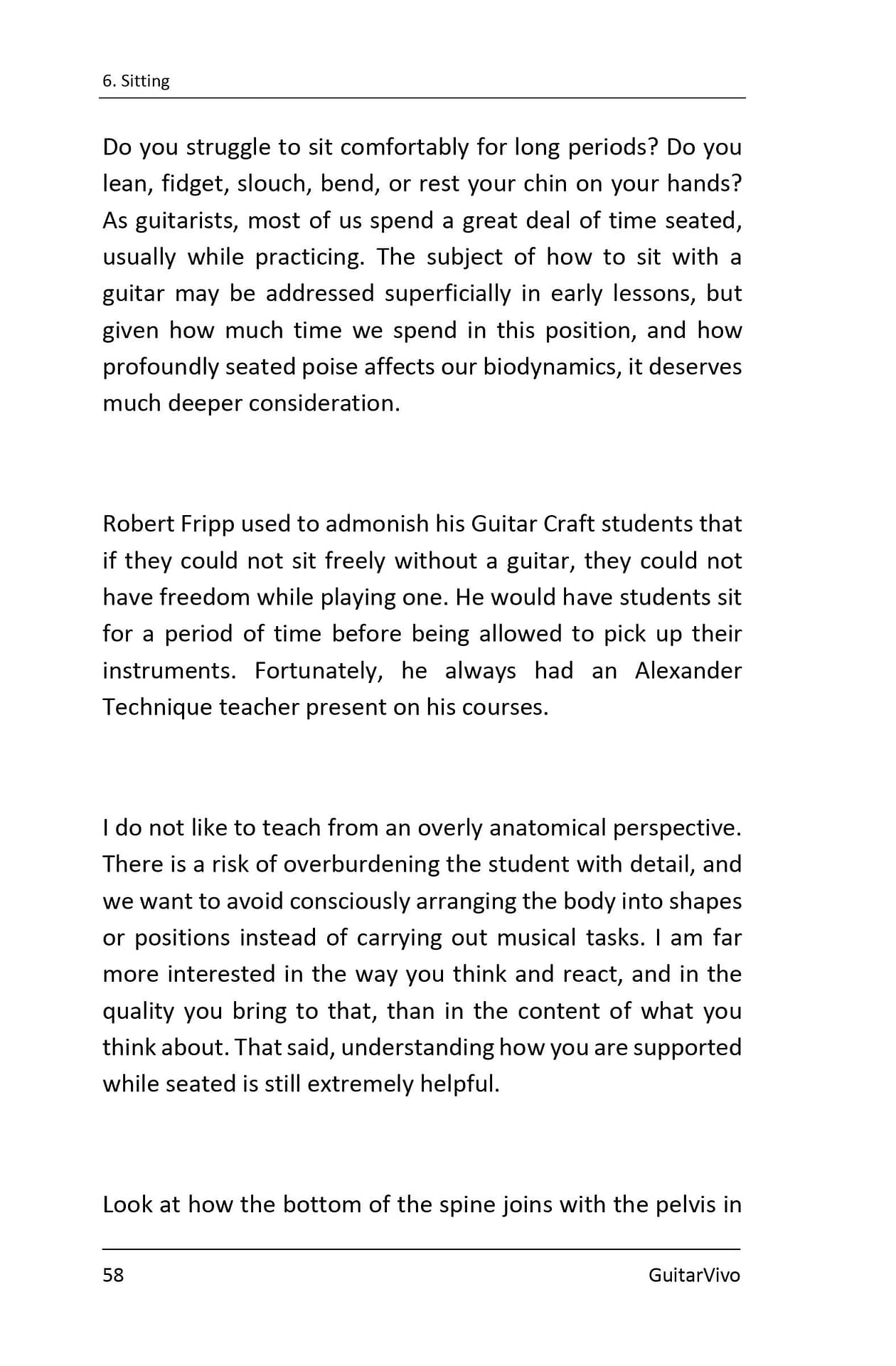
If you practice seated (like most guitarists), this chapter is a game-changer. You’ll learn how to sit with support and alertness, without collapsing, bracing, or fidgeting your way through practice sessions. You’ll also explore how the “journey” into the chair affects the quality of how you end up playing once you’re there. Expect better arm support, less back fatigue, and a setup that makes long practice sessions feel easier and more productive.
Chapter 7: Gravity
Most players think gravity is the enemy—something they have to fight to maintain posture and control. This chapter flips that idea and shows you how gravity can actually do the work for you when you stop interfering. You’ll learn how to feel supported from the ground up and how that support improves balance, coordination, and breathing. When you work with gravity instead of against it, technique gets cleaner, and tension drops fast.
Chapter 8: Your Fly-By-Wire System
Your nervous system is the real control center behind everything you play, and this chapter helps you understand it in a practical, player-friendly way. You’ll learn how stress, over-effort, and “trying harder” can create lag, clumsiness, and unwanted tension—especially at speed. By building calmer control and better sensory awareness, you’ll get more accuracy with less effort. The result is technique that feels smoother, more dependable, and easier to repeat under pressure.
Chapter 9: Breathing
Breathing affects timing, focus, tone, and even how your hands move—yet most guitarists ignore it until something goes wrong. This chapter shows you how breath-holding sneaks into difficult passages and quietly sabotages your playing. You’ll learn easy ways to reset your breathing so your nervous system settles and your body stays responsive. With a steadier breath, you’ll feel more grounded in practice, calmer in performance, and better able to “stay with the music.”
Chapter 10: Shoulders
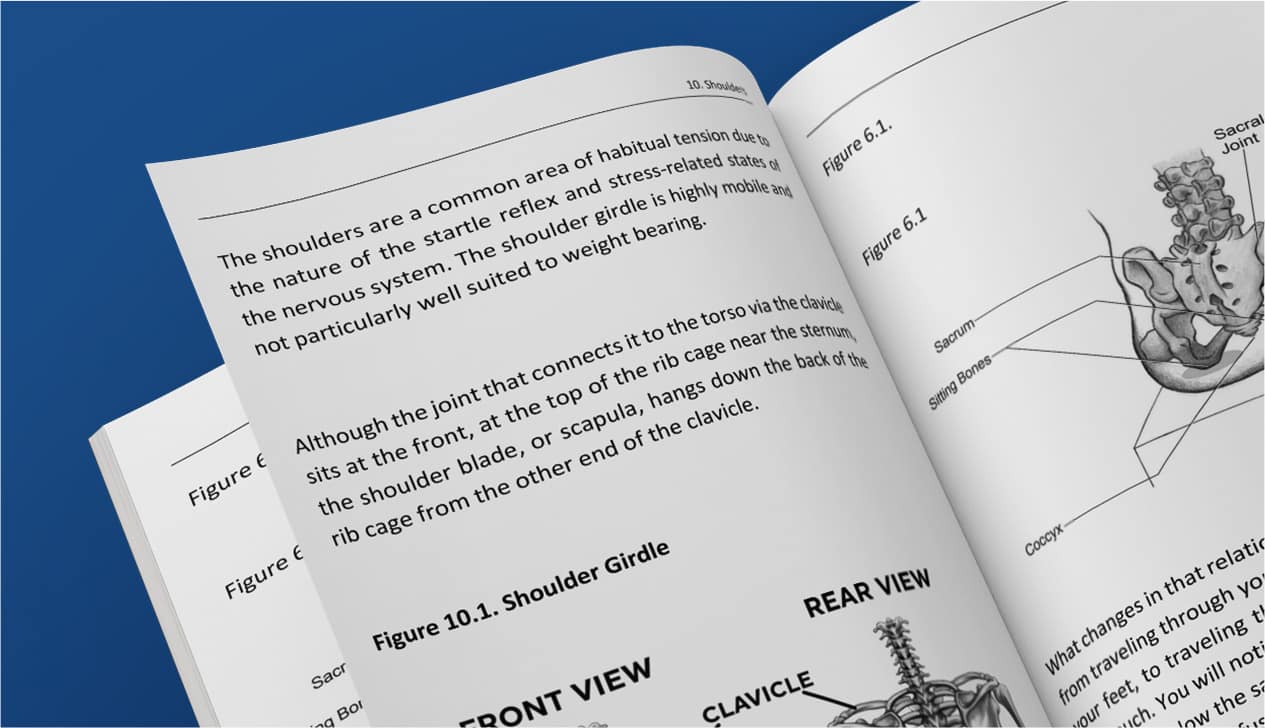
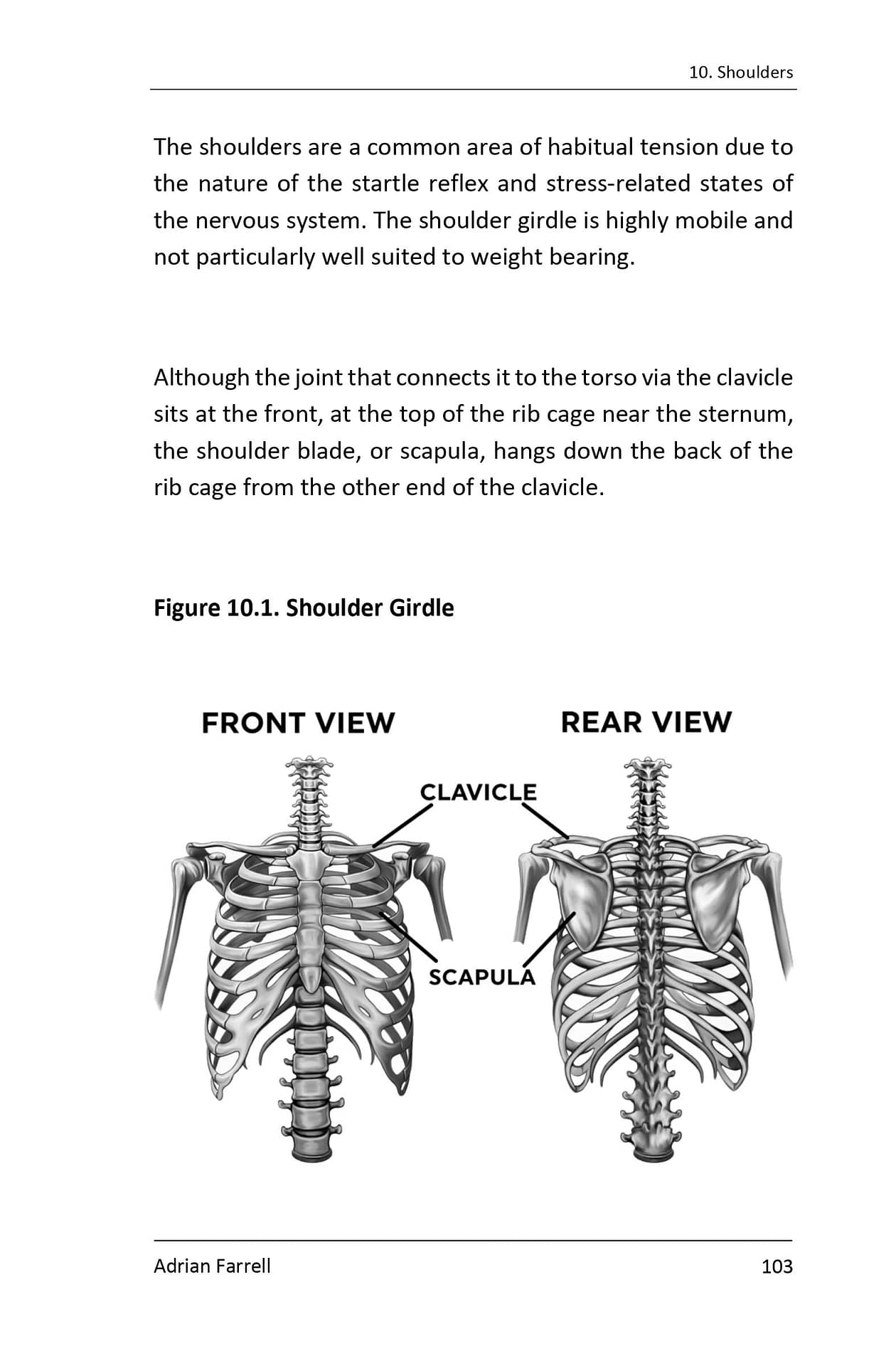
Shoulder tension is one of the biggest hidden sources of hand tension, picking issues, and endurance problems. In this chapter, you’ll learn how shoulder lifting and bracing often shows up as a reaction—especially when you’re concentrating or pushing for speed. You’ll explore simple ways to let the shoulders widen and settle without going limp or collapsing. The payoff is freer arms, cleaner technique, and less wear-and-tear during long sessions.
Chapter 11: Stretching
Stretching can help, but only if you stop treating your body like a stubborn machine that needs forcing into place. This chapter teaches a smarter, more musician-friendly approach: using awareness and intention so stretching actually reduces tension instead of triggering more of it. You’ll learn why “bullying” tight areas often backfires and how to create genuine release. Done right, stretching supports recovery, improves comfort at the instrument, and helps you practice more consistently.
Chapter 12: Constructive Rest
Constructive Rest is one of the fastest ways to reset your system and recover from the accumulated tension of daily life and playing. This chapter walks you through how to do it properly and why it works so well for musicians. You’ll learn how to use the floor as feedback, quiet the nervous system, and let your body reorganize itself without forcing anything. It’s a practical routine that supports better posture, easier breathing, and more consistent practice.
Chapter 13: Ergonomics
Small setup choices can create big changes in comfort and control, and this chapter helps you make those choices intelligently. You’ll explore how things like strap height, seating, guitar position, string gauge, and pick selection influence effort and technique. The goal isn’t a single “correct” setup, but a setup that supports your playing style without creating unnecessary strain. You’ll leave with practical ideas you can test immediately to feel better and play better.
Chapter 14: Emotions & Stage Fright Management
This chapter gives you a grounded, practical approach to nerves that doesn’t rely on wishful thinking. Instead of trying to “think your way out” of anxiety, you’ll learn how to work with the physical side of the stress response—breathing, attention, neck/shoulder tension, and grounding. You’ll also reframe nerves as a normal performance stimulus, not a sign of failure. The result is calmer focus, better control, and a more confident onstage version of you.
Chapter 15: Fretting Hand Exercises
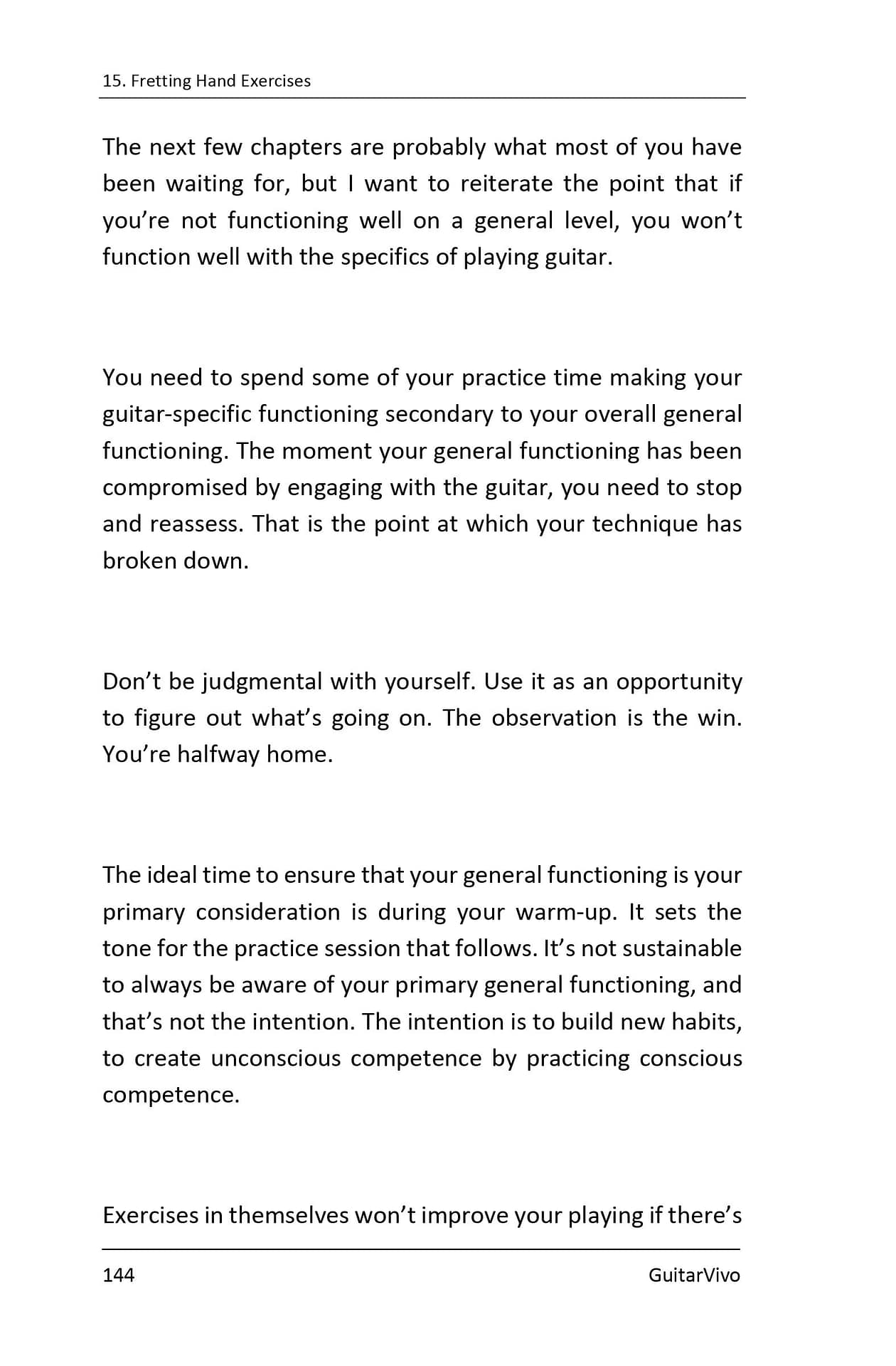
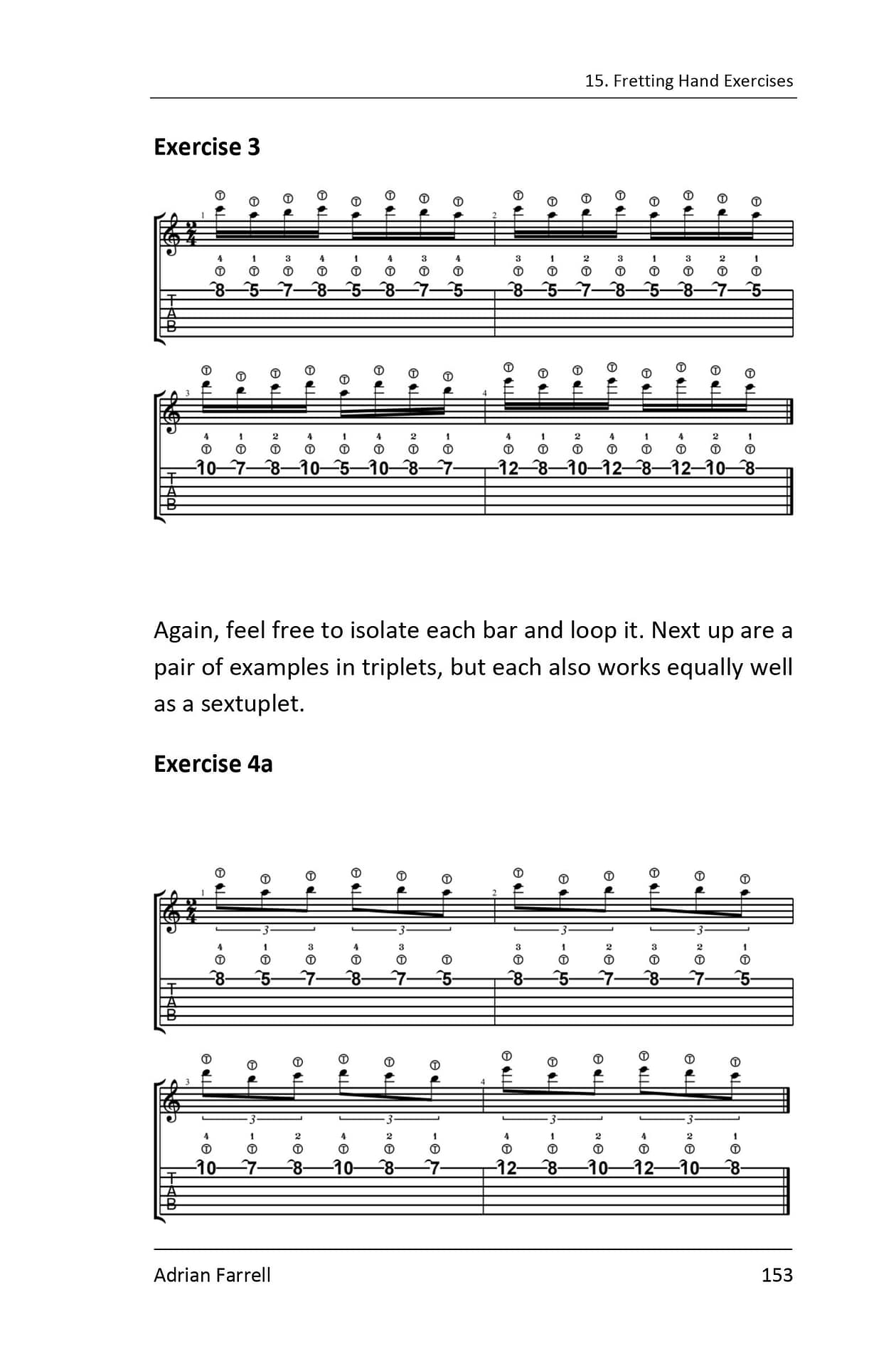
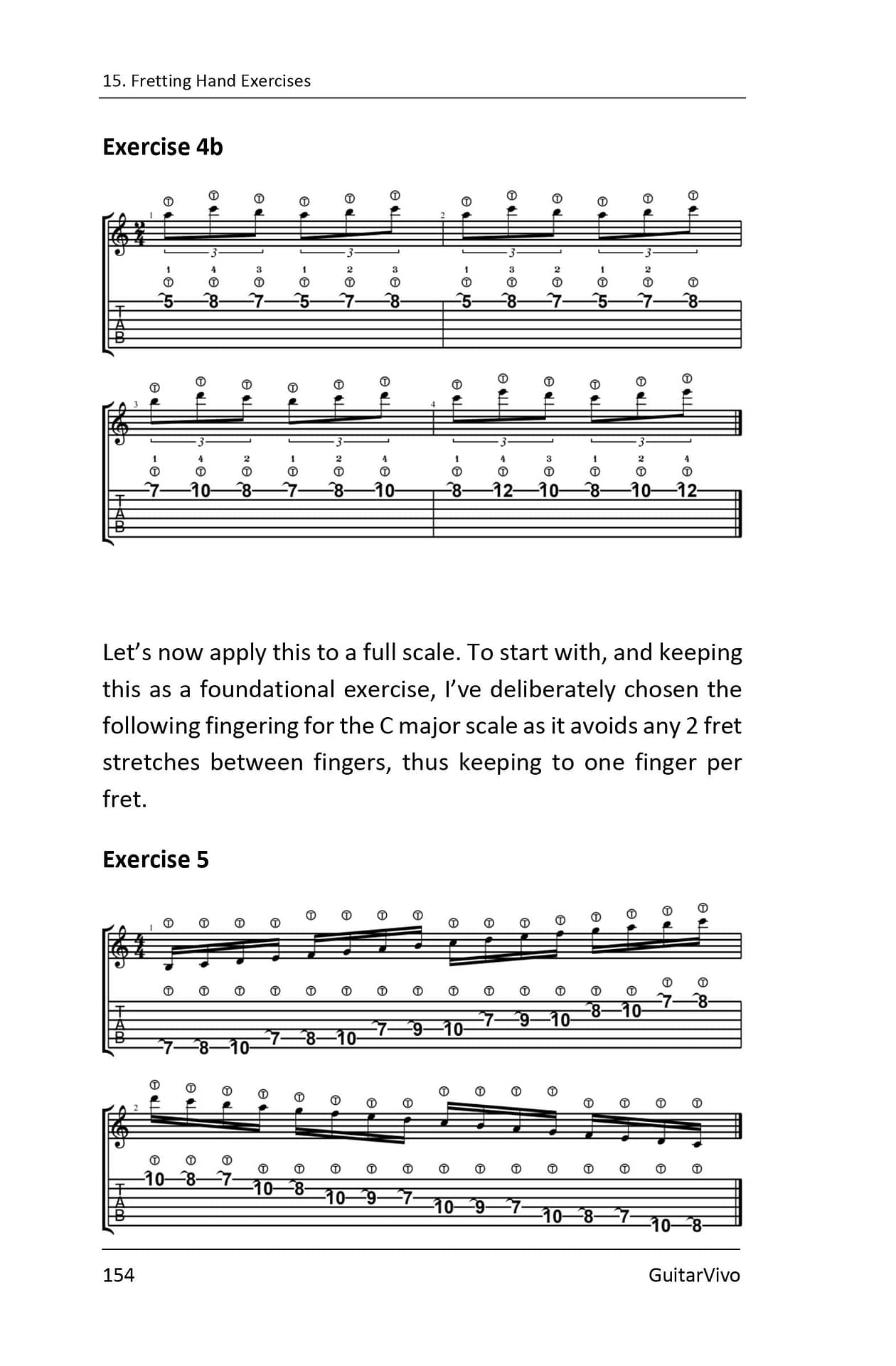
Now you bring the principles into real guitar mechanics, starting with the fretting hand. You’ll learn how to reduce excess pressure, improve finger independence, and avoid the “death grip” habits that ruin endurance and accuracy. This chapter covers practical explorations for thumb use, efficient fingering, and legato coordination—plus how to keep your whole body involved so the hand doesn’t overwork. Expect cleaner fretting, less fatigue, and more control with less effort.
Chapter 16: Picking Hand Exercises
This chapter tackles the picking hand from the ground up: how you move, how you grip, and how you stay relaxed at speed. You’ll explore composite picking motions, crosspicking, anchoring choices, upstroke control, and speed bursts—without tightening up as the tempo rises. You’ll also learn how “trying harder” often slows you down, and what to do instead. The result is a picking approach that feels lighter, sounds clearer, and holds up over longer sessions.
Chapter 17: Considerations For Bassists
If you play bass (or double on guitar and bass), this chapter helps you apply the same effortless principles to a different physical demand. You’ll learn how instrument size, string tension, and typical playing roles can change the way strain shows up—and how to adjust without overcompensating. The goal is to keep coordination and ease, even when the instrument feels heavier or the parts are more repetitive. Expect better endurance, fewer flare-ups, and a healthier long-term approach.
Chapter 18: Taking Time Out to Recover
Sometimes the most productive practice move is knowing when to stop—and how to come back intelligently. This chapter gives you a sensible recovery plan for when you’re sore, injured, overworked, or simply hitting diminishing returns. You’ll learn how to use rest, Constructive Rest, and gentle re-entry so your body doesn’t “snap back” into old tension patterns. The aim is long-term playing health: staying consistent, avoiding setbacks, and returning to the instrument feeling better than before.
Chapter 19: Practice Checklist
This chapter turns the big ideas into a simple, repeatable practice framework you can use every day. You’ll get clear reminders for reducing tension, maintaining poise, keeping both hands in awareness, and using breathing and pulse to stay grounded. It also helps you avoid rushing, forcing, and over-practicing past your current capacity. Think of it as your “pre-flight check” for better practice: less strain, more focus, and better results from the time you already spend playing.
Chapter 19: Constructive Rest Checklist
Here you get a practical guide for making Constructive Rest a real habit, not a once-in-a-while idea. You’ll learn what to focus on while resting, how to use breath and attention to quiet the nervous system, and how to relate discomfort to areas of support instead of fighting it. The checklist format makes it easy to revisit, one point at a time, until it becomes second nature. It’s a simple routine that supports recovery, posture, and better playing days.
Chapter 20: Case Studies
Real stories bring the principles to life, and these case studies show how different players apply the same ideas in different ways. You’ll see how tension patterns reveal themselves, what changes actually help, and why progress often happens through better choices rather than “more willpower.” This section also gives you perspective: you’re not the only one dealing with these challenges, and you’re not broken. You’ll come away with practical inspiration and a clearer sense of what’s possible when you stick with the process.
Chapter 21: Finding a Teacher
Some breakthroughs happen fastest with expert eyes and hands-on guidance, and this chapter helps you find the right support. You’ll learn what to look for in an Alexander Technique teacher, why accreditation matters, and how to approach lessons so you get real value quickly. It also encourages a balanced, practical mindset: don’t “end-gain” the process—let change unfold through better awareness and choices. If you want long-term results and accountability, this chapter points you in the right direction.
Conclusion: Turning Effortless Into a Lifestyle
Effortless playing isn’t a one-time fix—it’s a skill you build, reinforce, and return to whenever tension creeps back in. In this closing chapter, you’ll connect the dots between awareness, setup, technique, practice habits, recovery, and performance mindset. You’ll learn how to keep the principles alive in real musical situations, not just in “practice mode.” The goal is simple: more freedom, more reliability, and a body that can keep making music for years to come.
Appendix: Bonus Video Lectures
To help you see and hear the ideas in action, the book includes bonus video lectures from GuitarVivo events. These sessions reinforce the key principles with extra demonstrations, explanations, and real-world context, making it easier to apply the material to your own playing. If you learn best by watching and listening, this content bridges the gap between reading and doing. It’s the perfect companion for turning concepts into felt experience.
Appendix: Glossary
The glossary makes the book easier to revisit and apply over time, especially as the ideas become part of your daily practice. Use it as a quick reference for key terms, concepts, and recurring principles so you can refresh your understanding without rereading entire chapters. It’s designed to support consistent progress: less confusion, more clarity, and faster “in the moment” recall when you notice tension or effort creeping back in. Think of it as your map for staying on track.
By the End of This Book…
You’ll have a practical, musician-friendly system for reducing tension, improving coordination, and playing with more ease—without sacrificing power, accuracy, or expression. You’ll know how to sit, stand, breathe, and move in a way that supports real technique, from fretting and legato to picking speed and control. You’ll also have tools for handling nerves, preventing repetitive strain issues, and recovering smarter. Most importantly, you’ll feel more in command of your playing because you’ll understand how to use yourself well.
START YOUR JOURNEY WITH
Effortless Guitar
By Adrian Farrell
$22.99 Original price was: $22.99.$19.99Current price is: $19.99.
Got questions?
Here are some answers!
What exactly is the Alexander Technique?
It is a method used by world-class musicians to improve postural understanding and use the body’s natural mechanics more effectively. This book represents the first time these principles have been specifically applied to contemporary guitar styles like rock, pop, and blues.
I don’t have any injuries. Is this still for me?
Absolutely. While it is a breakthrough for those with RSI or age-related pain, it is designed for anyone serious about guitar who wants to practice safely, overcome stage fright, and develop a technique that lasts for a lifetime of playing.
Is this book for beginners, intermediate, or advanced players?
This book is for anyone serious about guitar playing, regardless of their level. It is especially valuable for those looking to develop safe practice habits, overcome playing-related pain (like RSI), or deepen their physical relationship with the instrument to focus more on the music itself.
Will this help me play faster?
Yes! By showing you how to execute techniques with elegance and minimal effort, you will learn how to effectively develop speed and fluidity without the tension that usually slows players down.
Does the book come with audio and video files?
Yes! The package includes 6 hours of bonus video lectures and masterclasses. These are designed to help you visualize the key physiological concepts and technical exercises discussed in the text.
What’s the difference between the PDF and the paperback version?
Both versions contain the same breakthrough education on the Alexander Technique for guitarists. The PDF is perfect for instant digital access on all your devices, while the high-quality paperback is ideal for those who prefer a physical reference on their music stand.
How do I access the bonus video masterclasses?
Instructions for accessing all bonus content and media files are provided inside the book. You’ll find a URL that directs you to a private, members-only page where you can download or stream all the included resources.
More from GuitarVivo
Check out some of our best-sellers!