BUY MORE, SAVE MORE! 🚀
| 2 PDFs10% | 3 PDFs15% | 4+ PDFs20%
| 2 PDFs10% | 3 PDFs15% | 4+ PDFs20%

BOOK & VIDEO PACKAGE
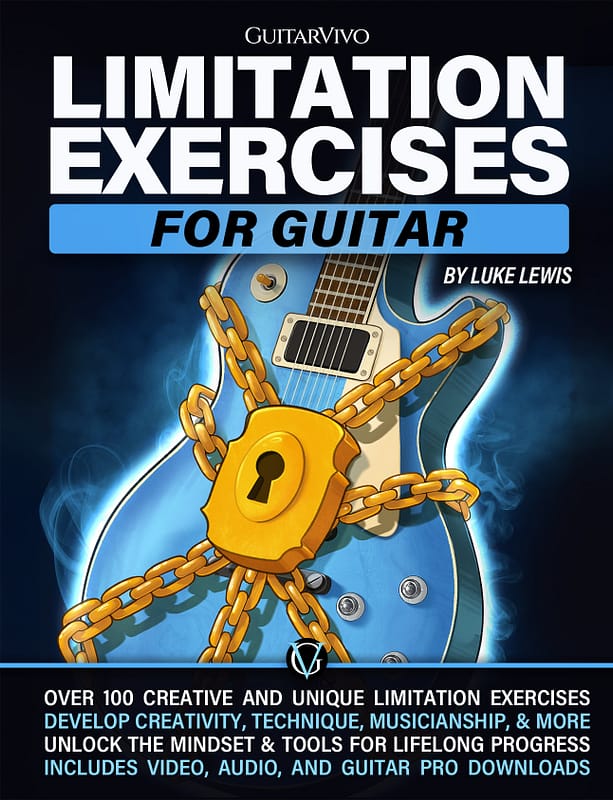
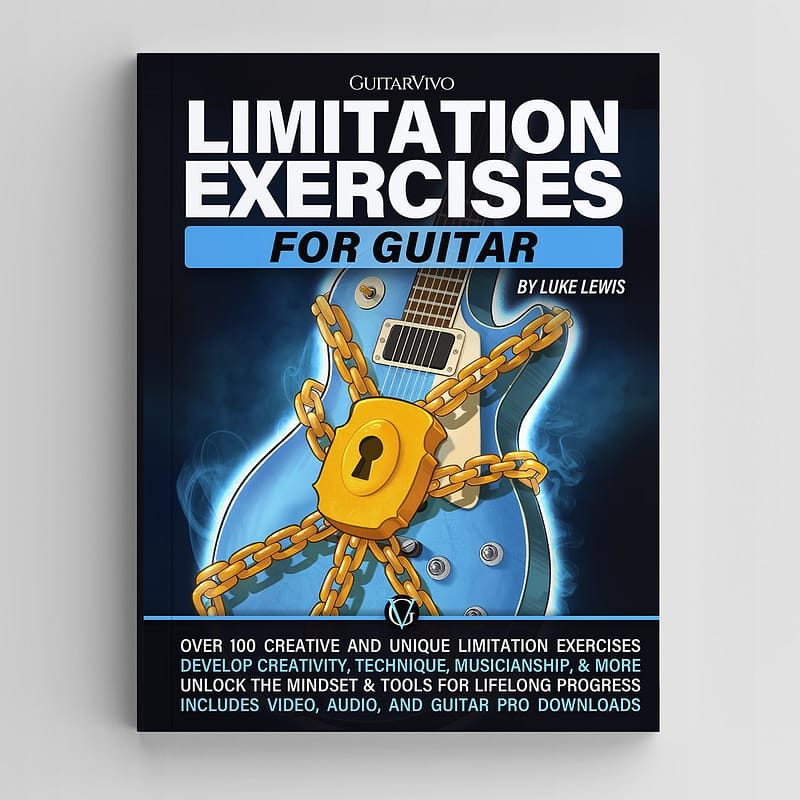
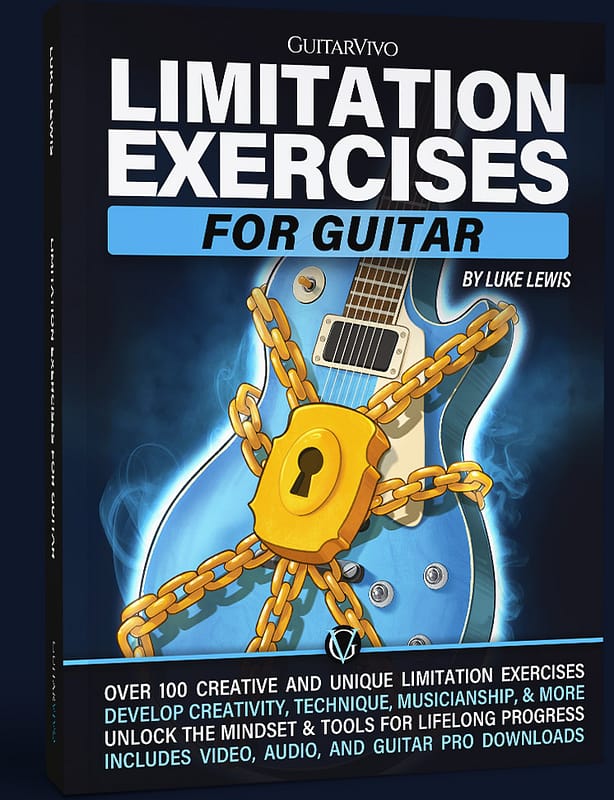
By Luke Lewis
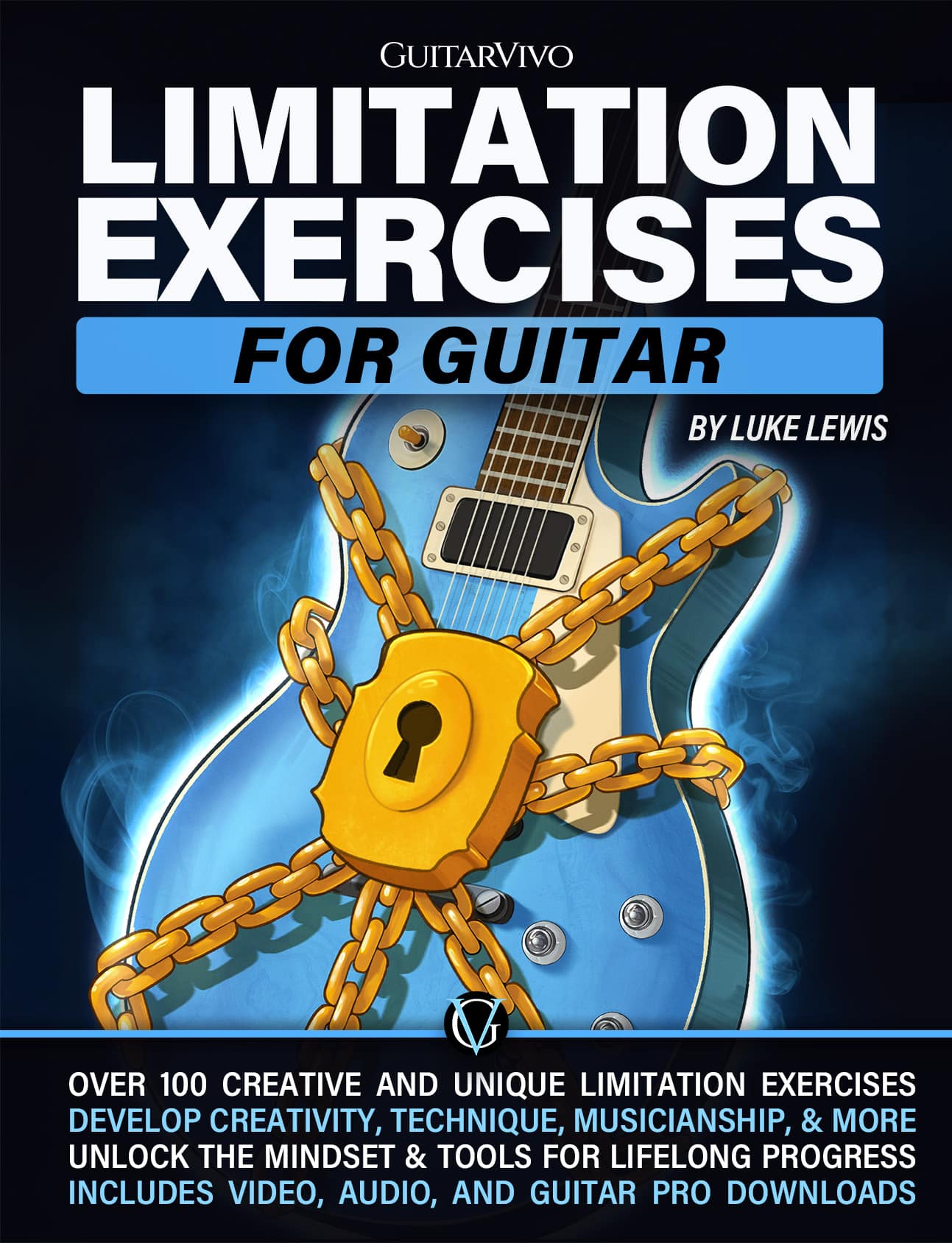
Stop practicing more. Start practicing smarter. Over 100 targeted limitation exercises that break bad habits, sharpen your phrasing, and help you sound like yourself, in any style.
$22.99
$22.99
Everything you get
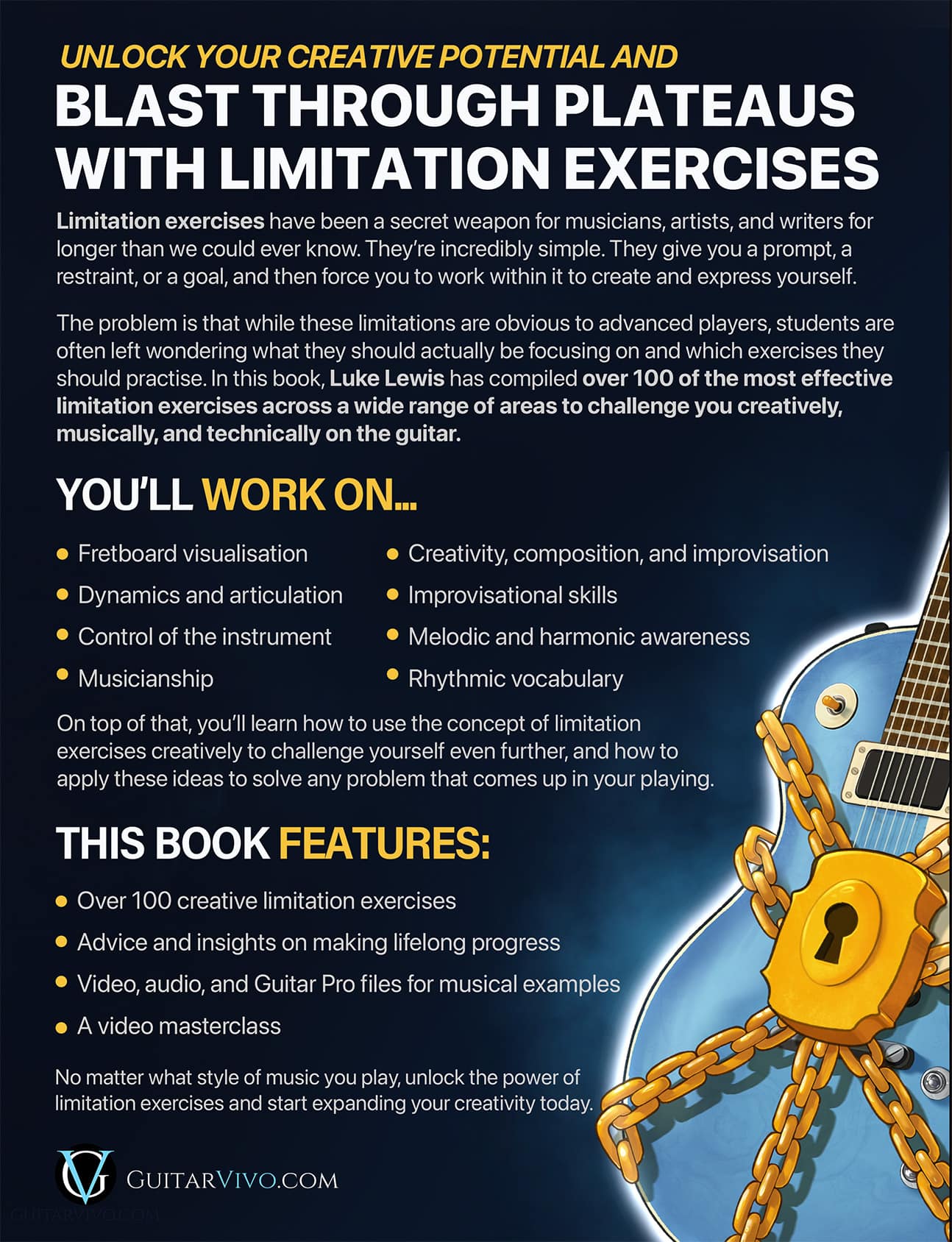
Everything you need to practice with more intent, break through plateaus, and develop a personal voice on the guitar.
122-page book
Over 100 exercises across melody, rhythm, technique, harmony, and performance
HD video & audio files
Every musical example demonstrated clearly, see and hear exactly how each concept sounds
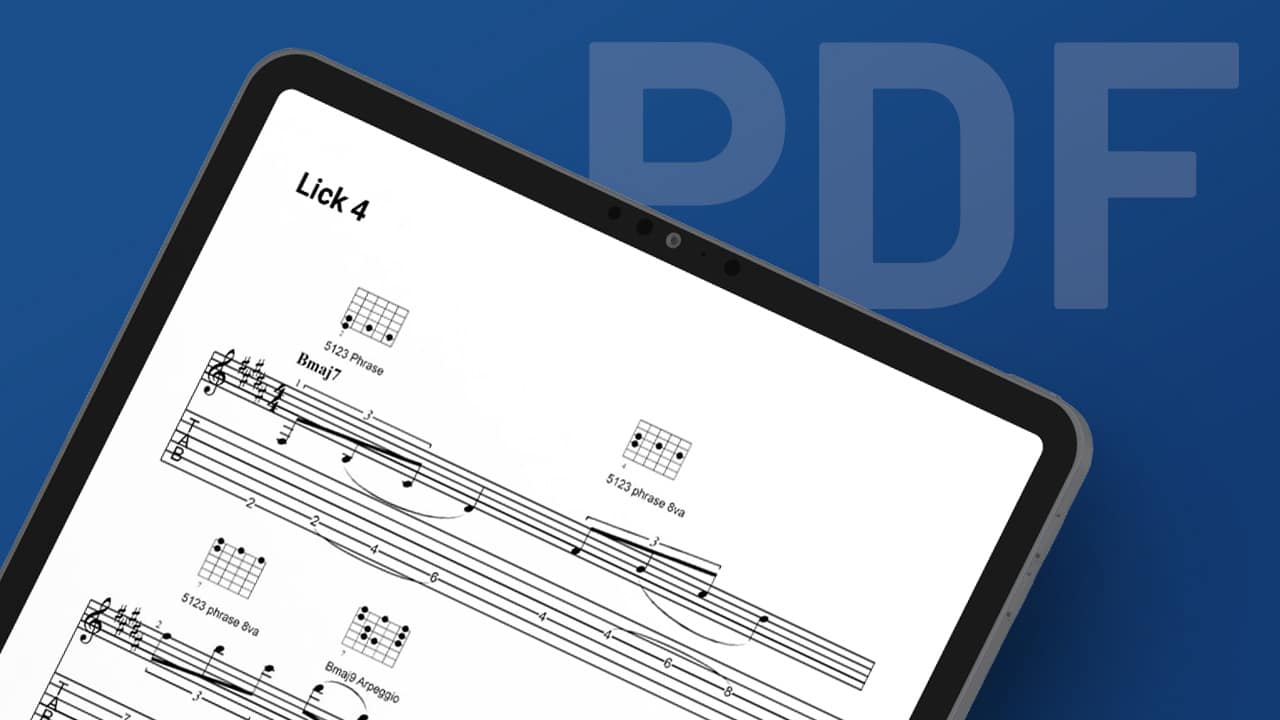
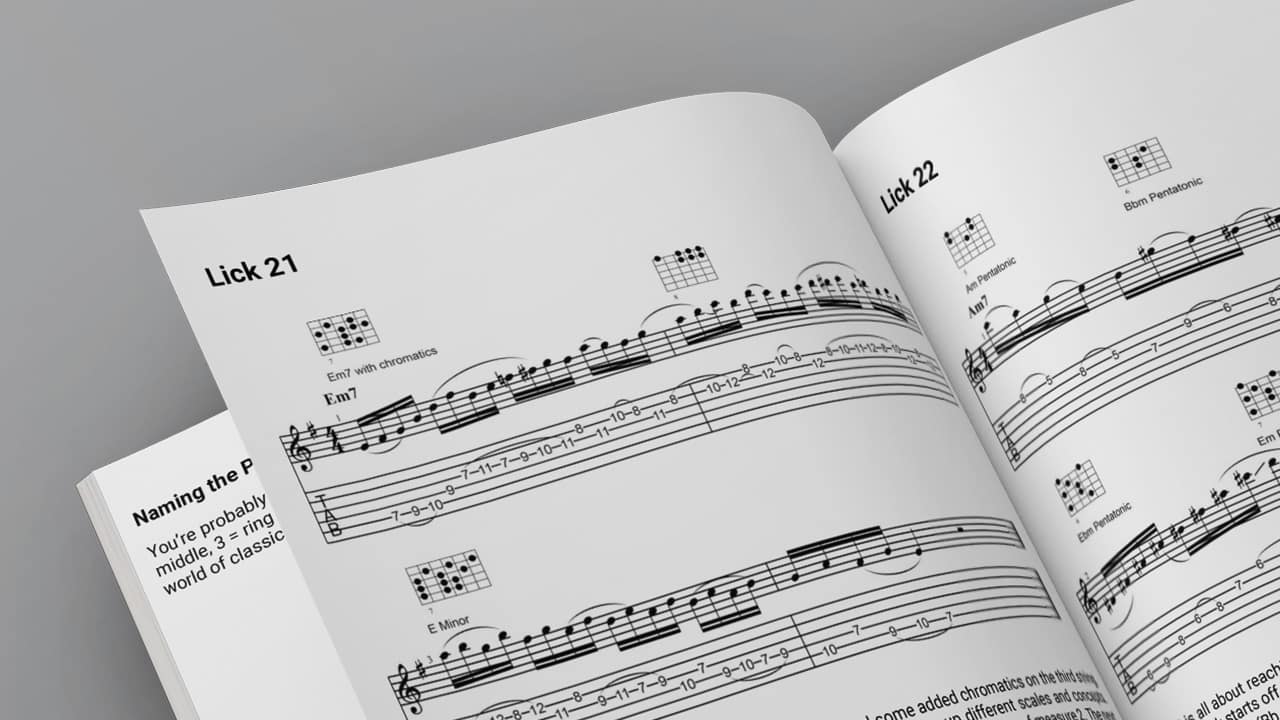
Tab & notation
Full transcriptions so you can read, study, and internalize every example
Guitar Pro Files
Edit, loop, and slow down any example directly in Guitar Pro
EXERCISES IN ACTION
Melodic
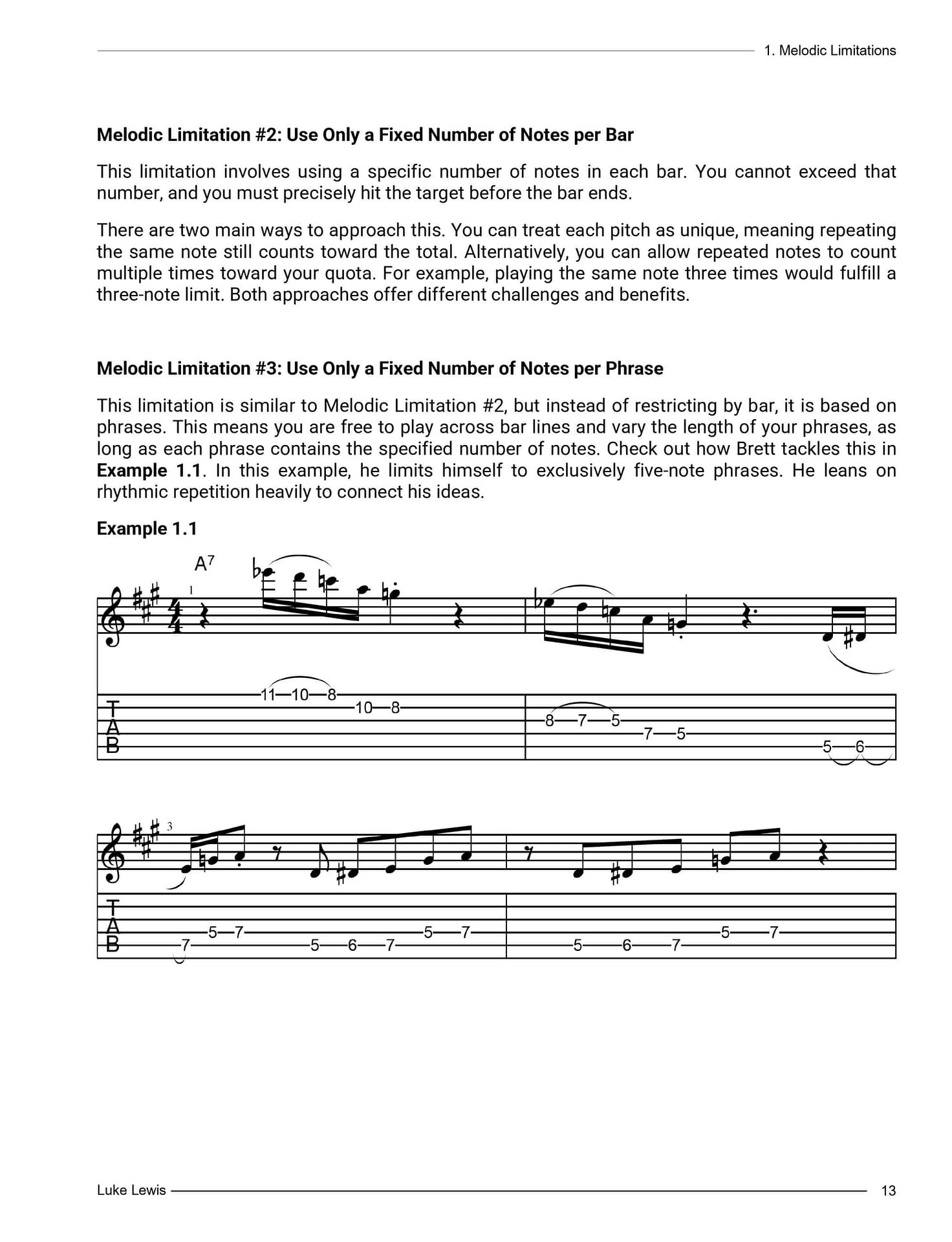
5-Note Phrases
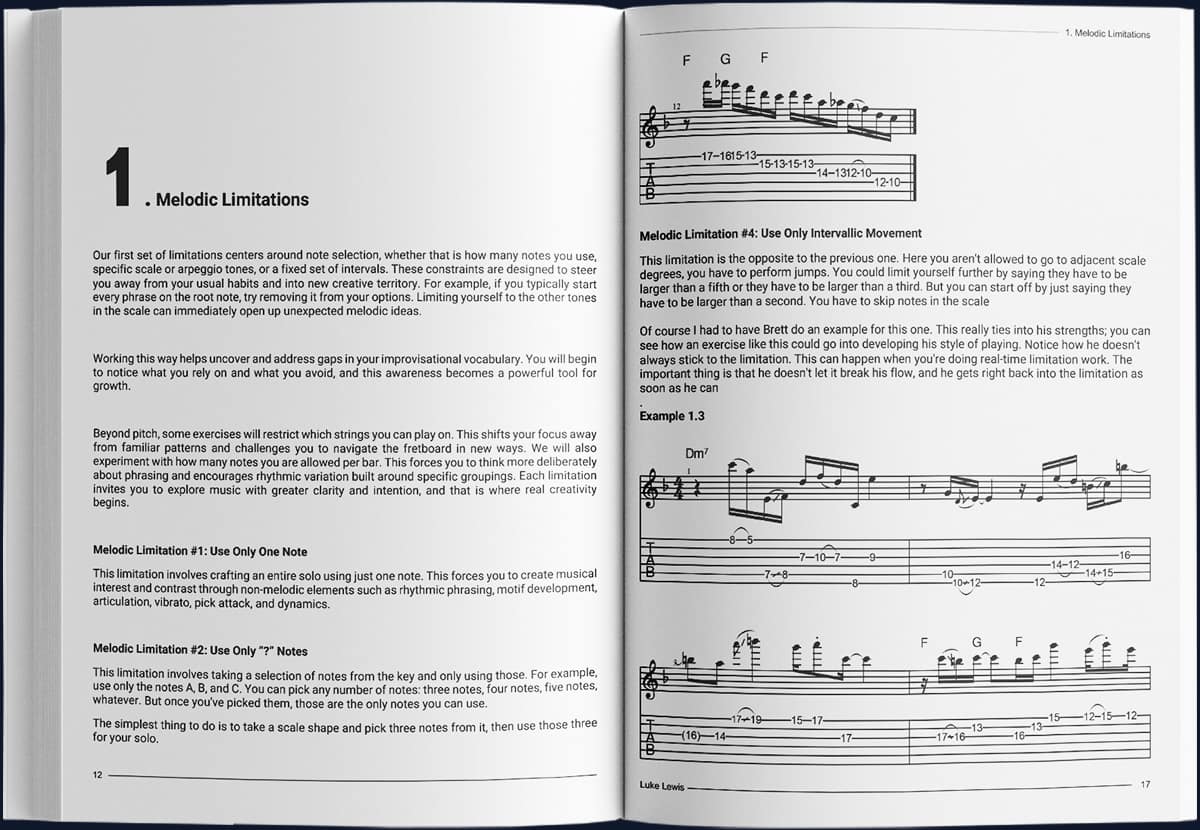
Chapter 1: Melodic Limitations
Rhythmic
Begin All Phrases on an Upbeat
Chapter 7: Rhythmic Limitations
Articulation
Only Pull-offs & Upstrokes
Chapter 3: Technique & Articulation Limitations
Fretboard
Non-Adjacent Strings Only
Chapter 2: Geographical Limitations
Target
Start & End on the Same Note
Chapter 8: Takeoff & Target Limitations
Rhythmic
Alternate Straight & Swing Feel
Chapter 7: Rhythmic Limitations
A STRUCTURED PATH TO GROWTH
Three phases that take you from identifying weaknesses all the way to designing your own exercises for lifelong progress.
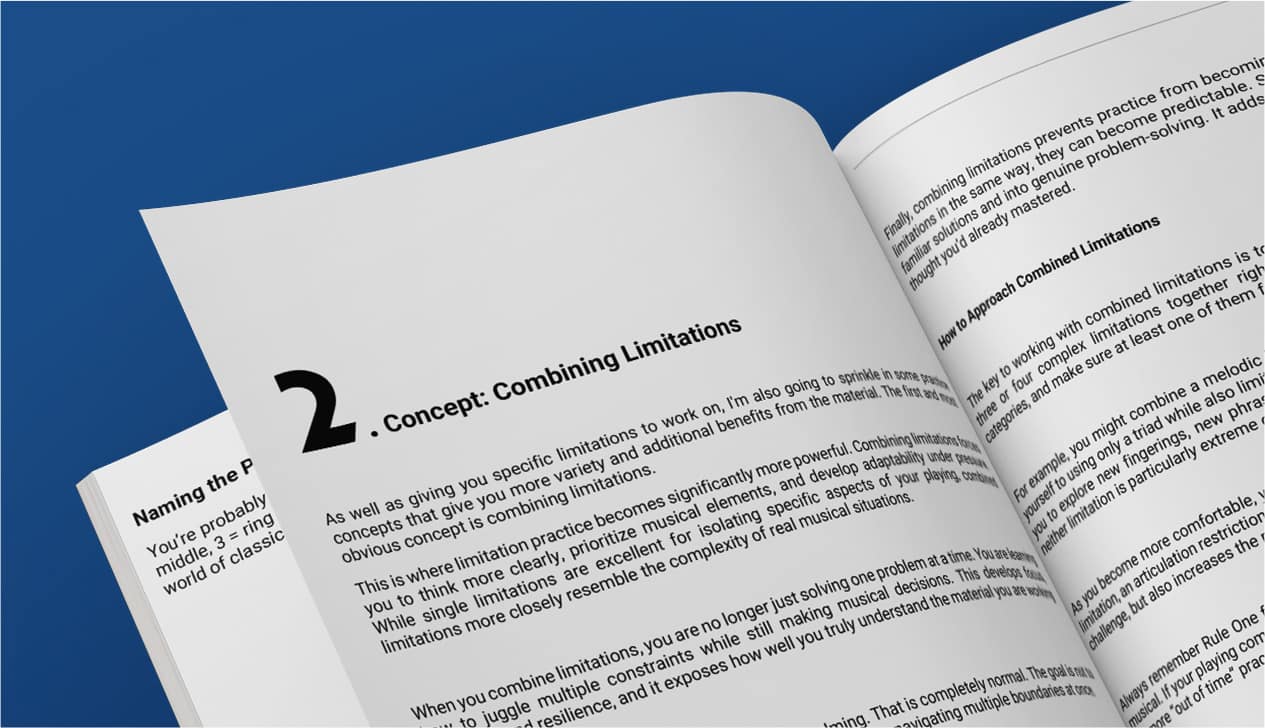
STEP 1
Apply a Limitation
Choose any exercise from 16 categories — melodic, rhythmic, technical, harmonic, and more. Apply it to your playing and immediately expose habits you didn't know you had.
STEP 2
Combine & Cycle
Learn how to layer, expand, shrink, and transition between limitations, just like advanced players do to shape real solos with direction, pacing, and contrast.
STEP 3
Design Your Own
The real goal: build a self-directed practice system. You'll finish the book knowing how to diagnose any weakness and create the exact exercise you need, forever.
100+ exercises · HD video & audio · Tab & notation · Guitar Pro files

MEET YOUR INSTRUCTOR
Luke Lewis is a guitarist, educator, and co-author of more than 30 bestselling guitar education books. He began playing at 13 and was teaching by 15, later earning a bachelor's degree in jazz guitar and studying with players including Tom Quayle, George Marios, Tim Lerch, and Jamie Glaser. Luke is also the founder of GuitarVivo — a platform dedicated to helping students learn directly from world-class musicians. Known for turning complex musical ideas into clear, practical tools, he is one of the most trusted voices in guitar education today.
WHAT YOU WILL COVER
MUSICAL CONTROL
FRETBOARD & TECHNIQUE
CREATIVITY & PERFORMANCE
✨
Includes video & audio examples featuring demonstrations by Brett Garsed — so you hear exactly how each concept sounds from a world-class player.
CHOOSE YOUR FORMAT
Both formats include all audio, video, and bonus content.
WHAT STUDENTS ARE SAYING
for Limitation Exercises for Guitar
Expands options, breaks old habits
This book is an excellent addition to my practice routine. It shows how to break out of the usual scales. By limiting what notes, tempos, and how many notes per bar it forces you to break away from the usual runs that became habits. It makes you think of ways to express yourself within a confined set of options which opens up new ideas.
ibemarkv
February 15, 2026

Modern licks
Great book with some really useful tips, tricks and exercises.
Luke Bishop
February 22, 2026
New methods to improve playing
Excellent book. Studying advanced blues. So much great content.
Mark
February 15, 2026
Different thinking, great purchase.
Luke has produced a great book with a different way of thinking about exercises and practice routines, I'd highly recommend.
Tony Gravel
February 20, 2026
Not just a mindless exercise book
Brett Garsed is a monster guitar player and highly respected in his peer group. Don't let the title deceive you, this isn't just an exercise book, it's a book for taking a fraction of a scale or a motif and creating an almost limitless set of permutations that you can use for developing your own musical ideas.
Smitty
February 15, 2026
Very good book
Really well presented book.
Colin
February 22, 2026
LOOK INSIDE
Click any page to zoom in
FULL BREAKDOWN
Get a closer look at the curriculum, chapter by chapter.
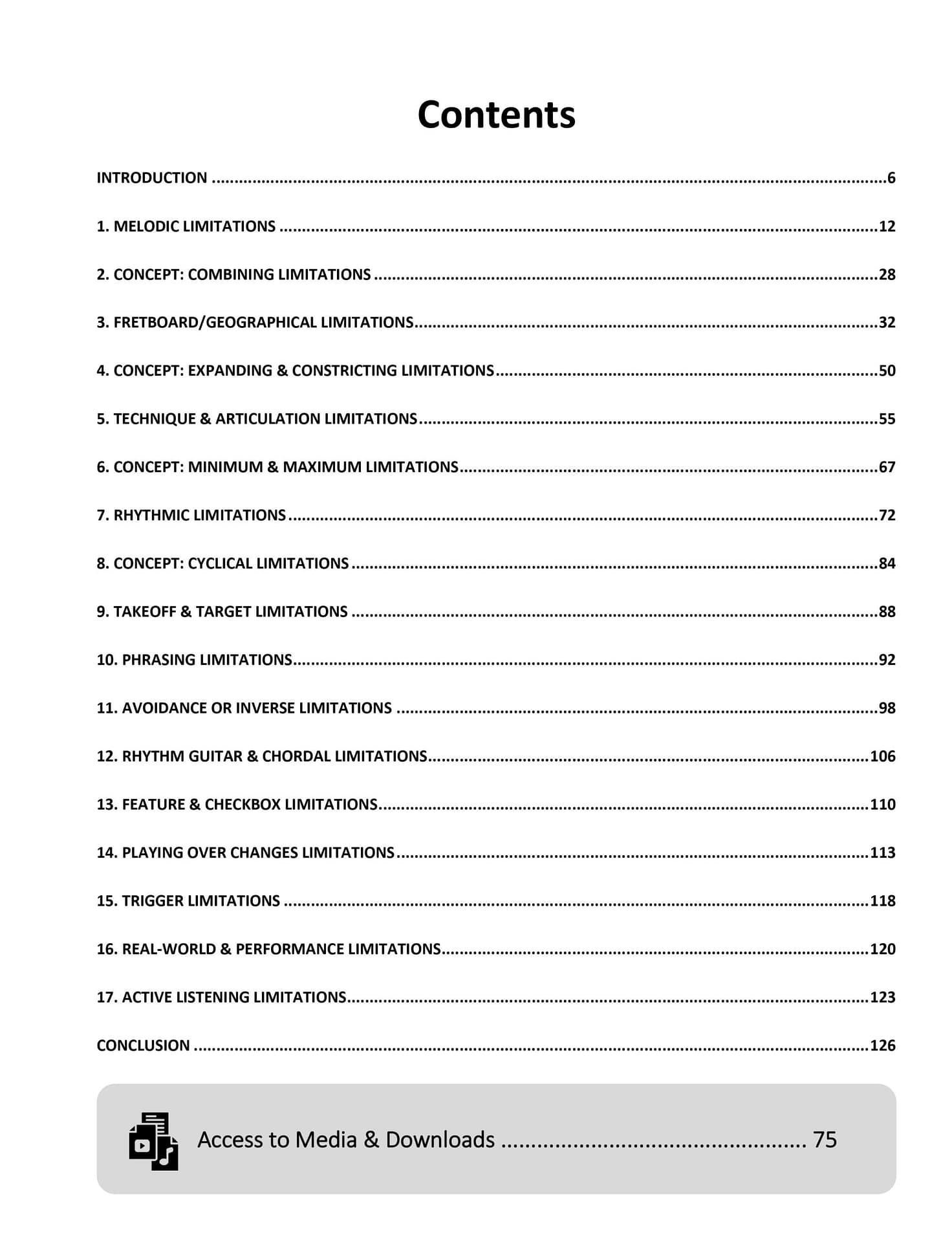
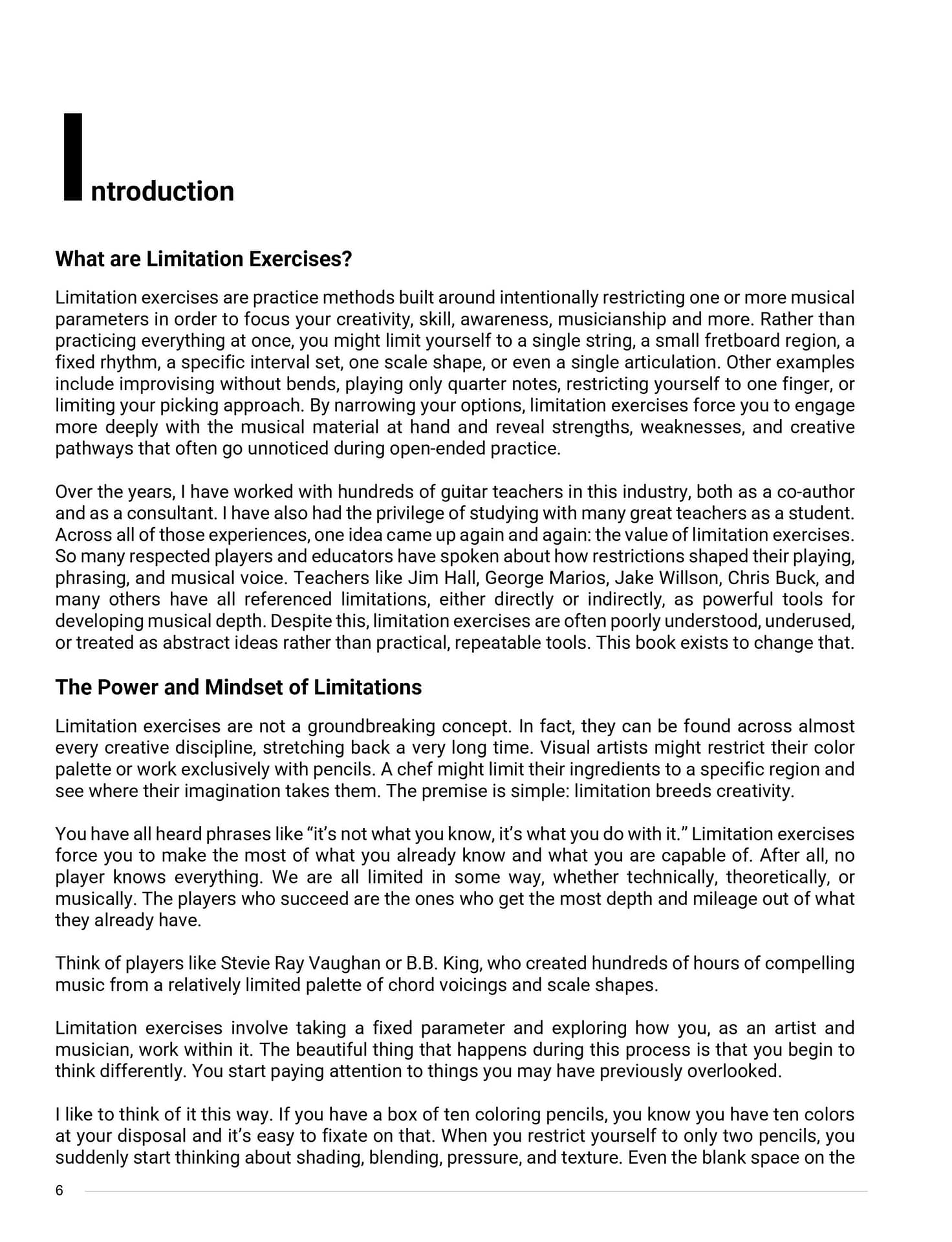
This opening chapter reframes how you think about practice. You'll discover why limitations are one of the most powerful tools for creativity, problem-solving, and long-term growth on the guitar. Rather than treating constraints as obstacles, you'll learn how they expose habits, sharpen awareness, and help you get more musical mileage from what you already know. This chapter sets the mindset that underpins the entire book.
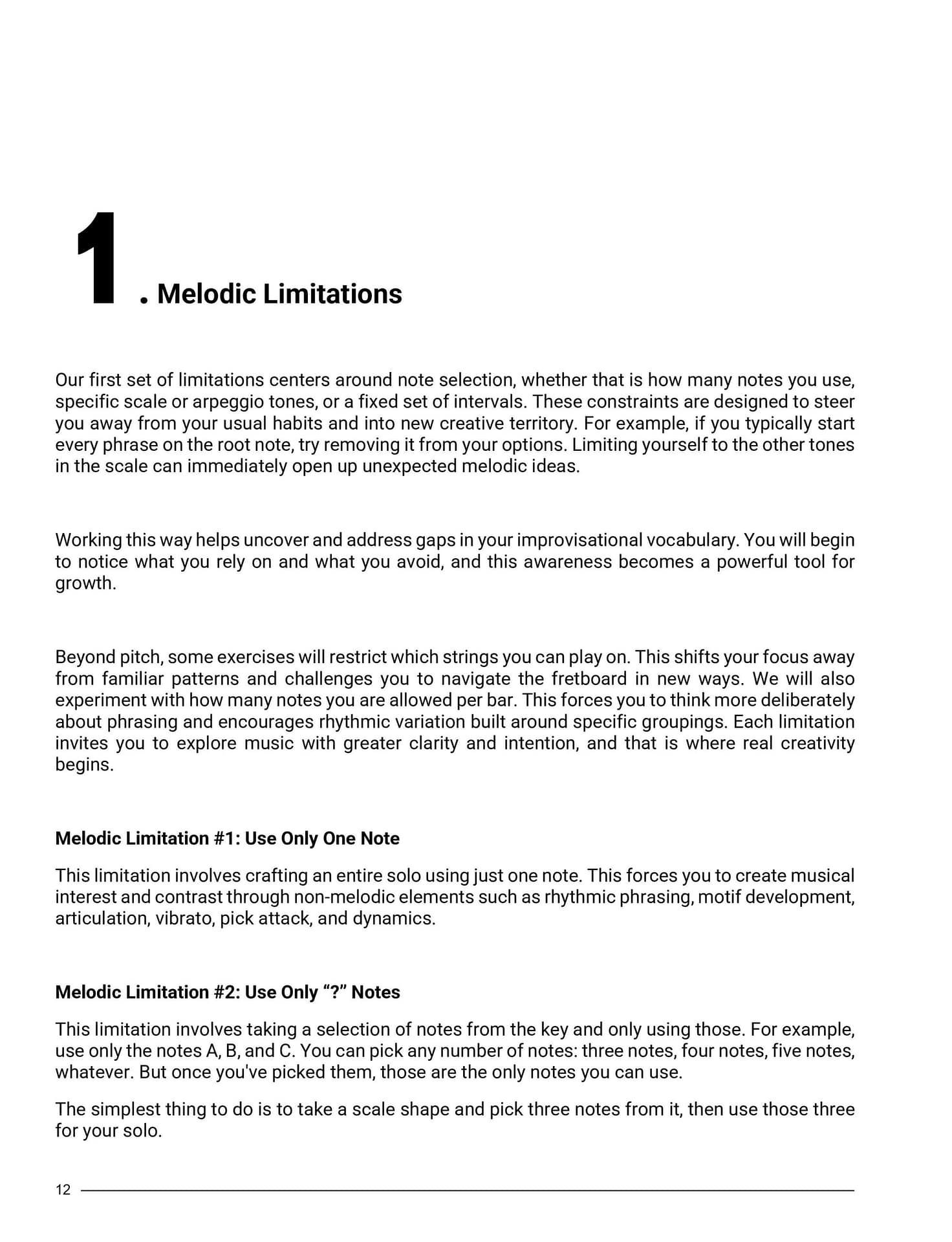
Learn how restricting note choice can radically improve your phrasing and melodic clarity. This chapter explores limitations based on scales, arpeggios, intervals, note counts, and melodic shapes. By narrowing your options, you'll uncover fresh ideas, strengthen weak areas of your vocabulary, and learn how strong melodies are built. These exercises help you stop relying on muscle memory and start making intentional melodic decisions.
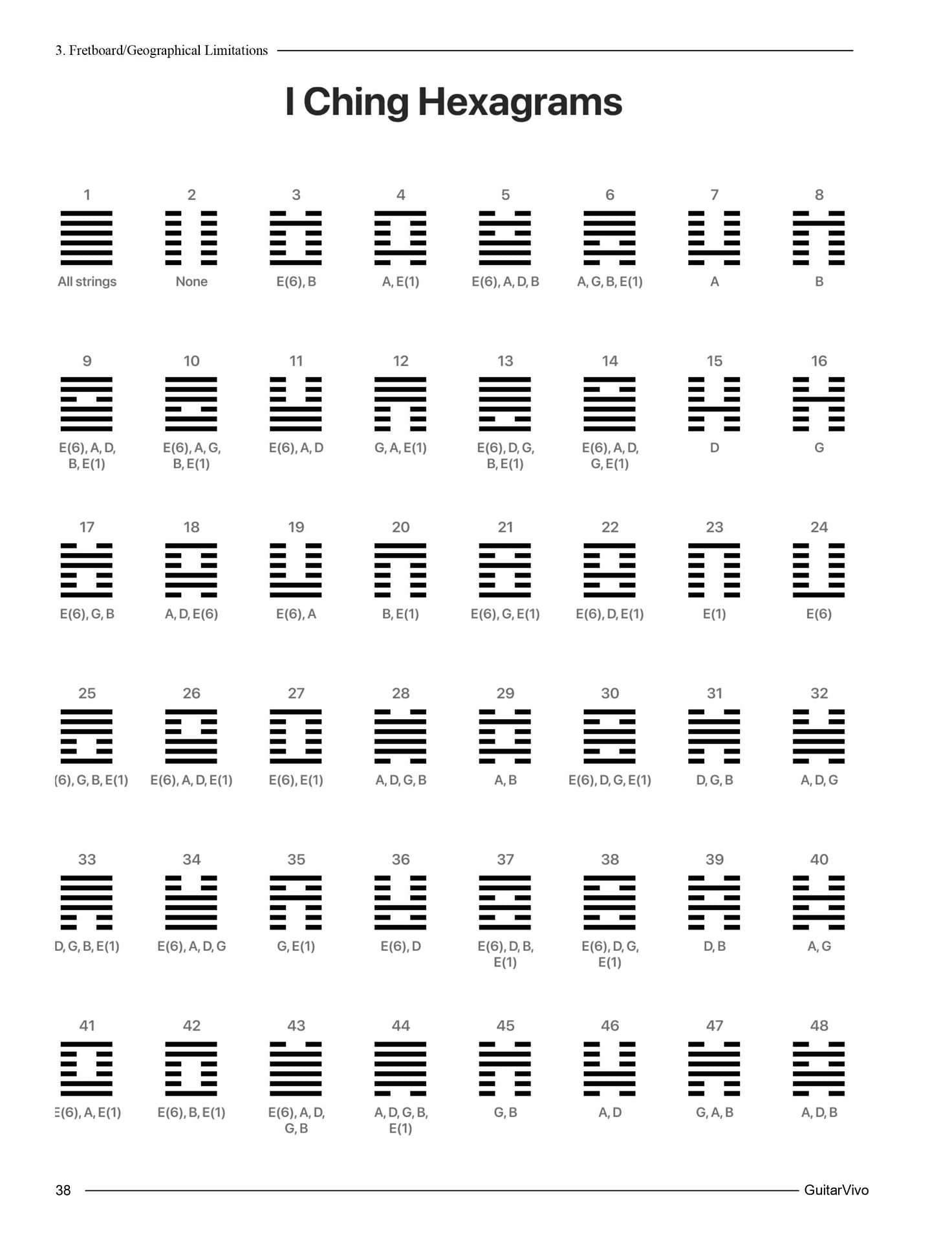
Geographical limitations focus on where you play on the fretboard. You'll work with constraints involving strings, positions, fret ranges, and movement rules. These exercises challenge your visual habits, deepen fretboard awareness, and prevent you from defaulting to comfortable shapes. By learning to create music in unfamiliar physical spaces, you'll gain confidence and flexibility across the entire neck.
This chapter isolates the physical side of your playing. You'll explore limitations involving picking direction, articulation, dynamics, accents, finger usage, and attack. Rather than mindless drills, these exercises build control, consistency, and expressive nuance. By focusing on how notes are produced, you'll develop greater sensitivity, cleaner execution, and a deeper connection between technique and musical intent.
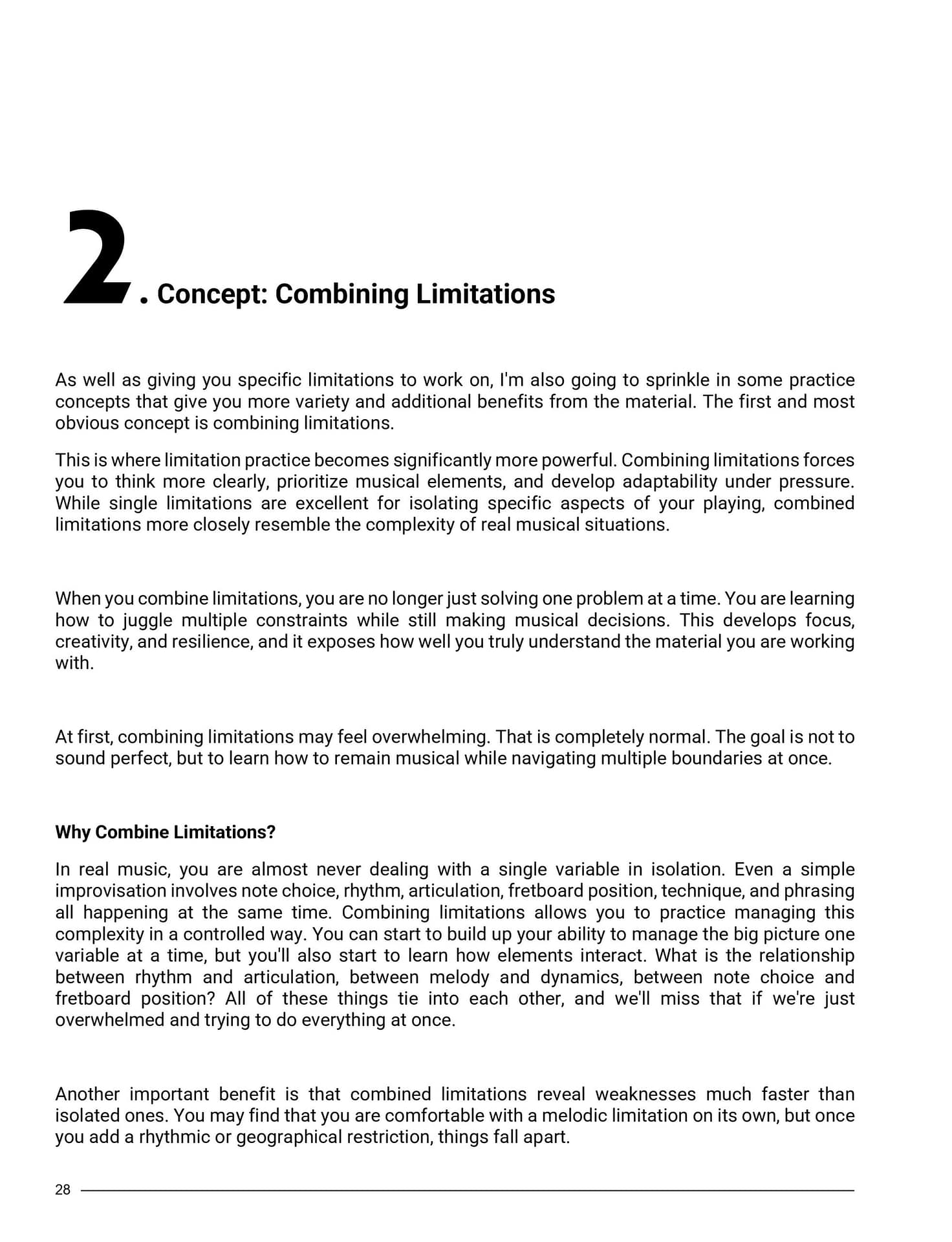
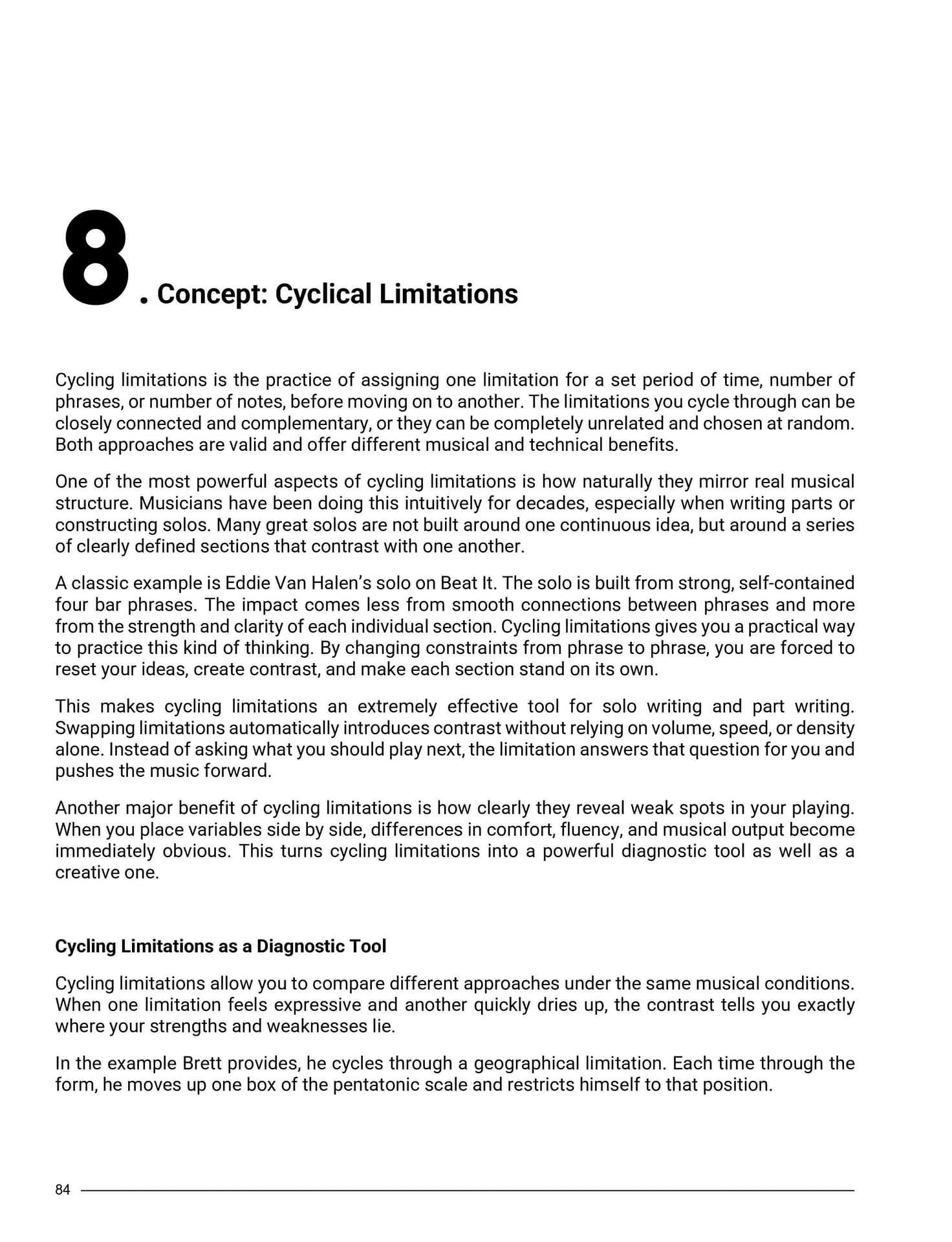
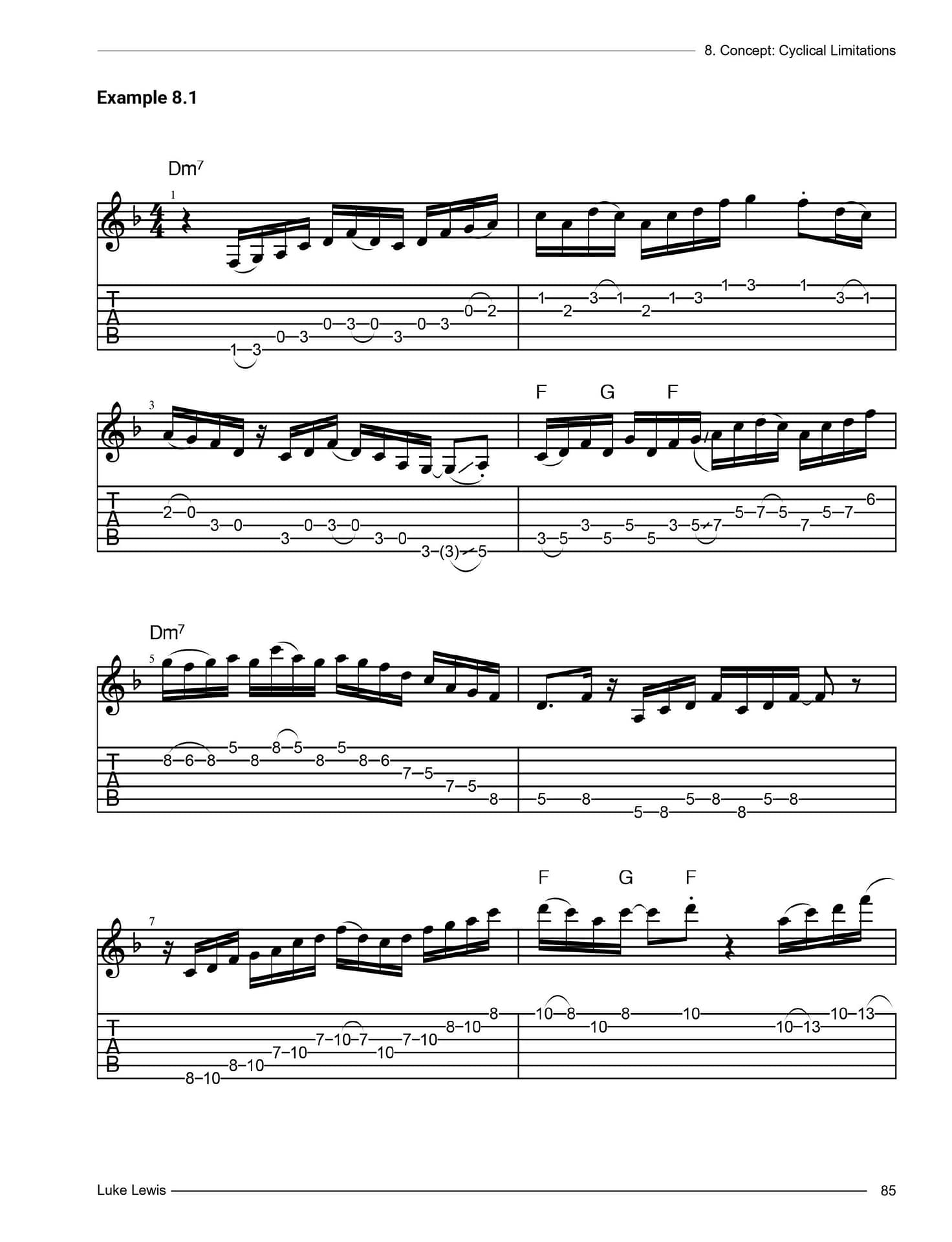
Learn how to move between limitations intentionally to create contrast, structure, and development. Cycling limitations teach you how to change rules over time while staying musical. This chapter shows how players use limitation changes to shape solos, diagnose weak spots, and structure ideas. You'll learn how transitioning constraints mirror real musical situations and help you adapt smoothly under changing conditions.
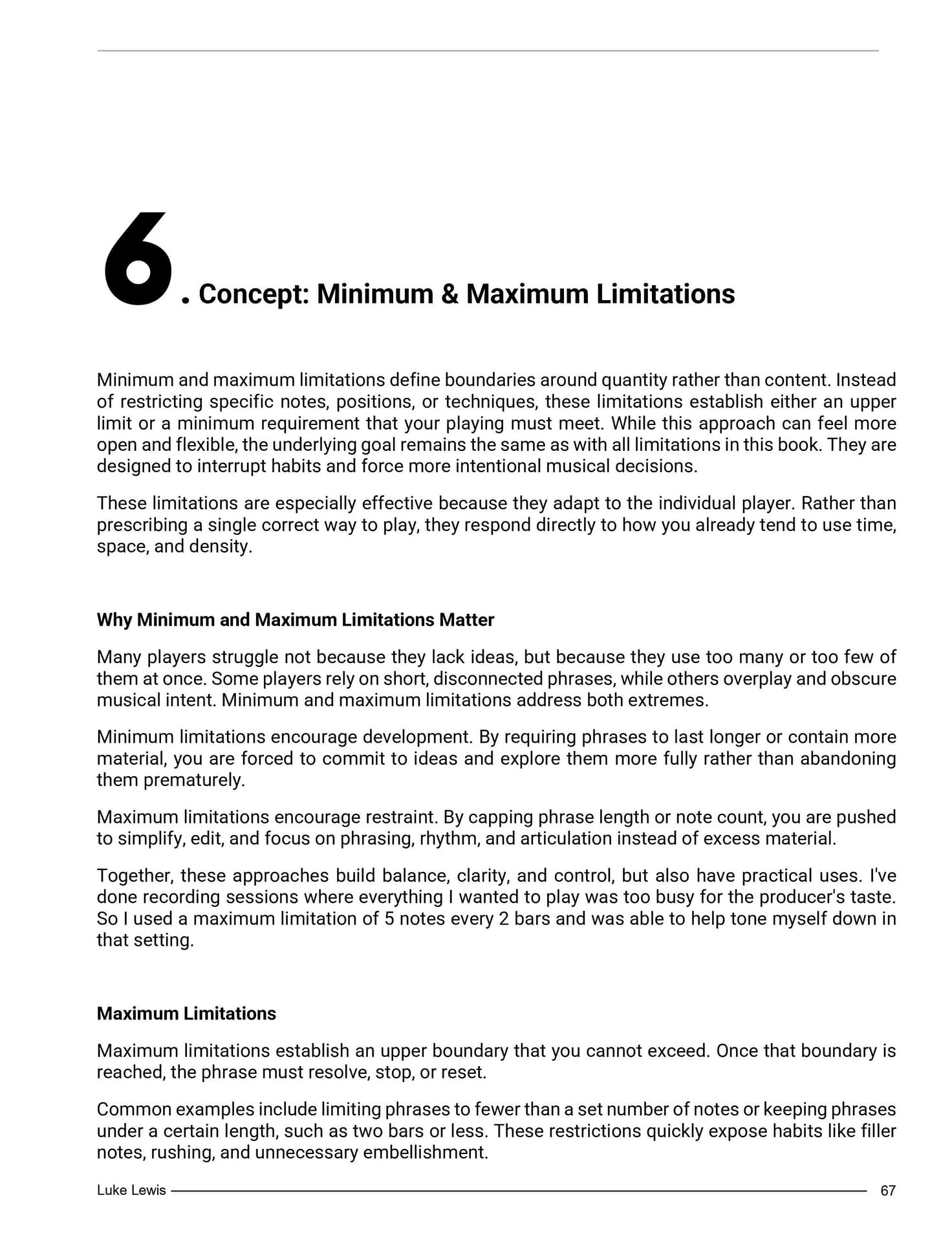
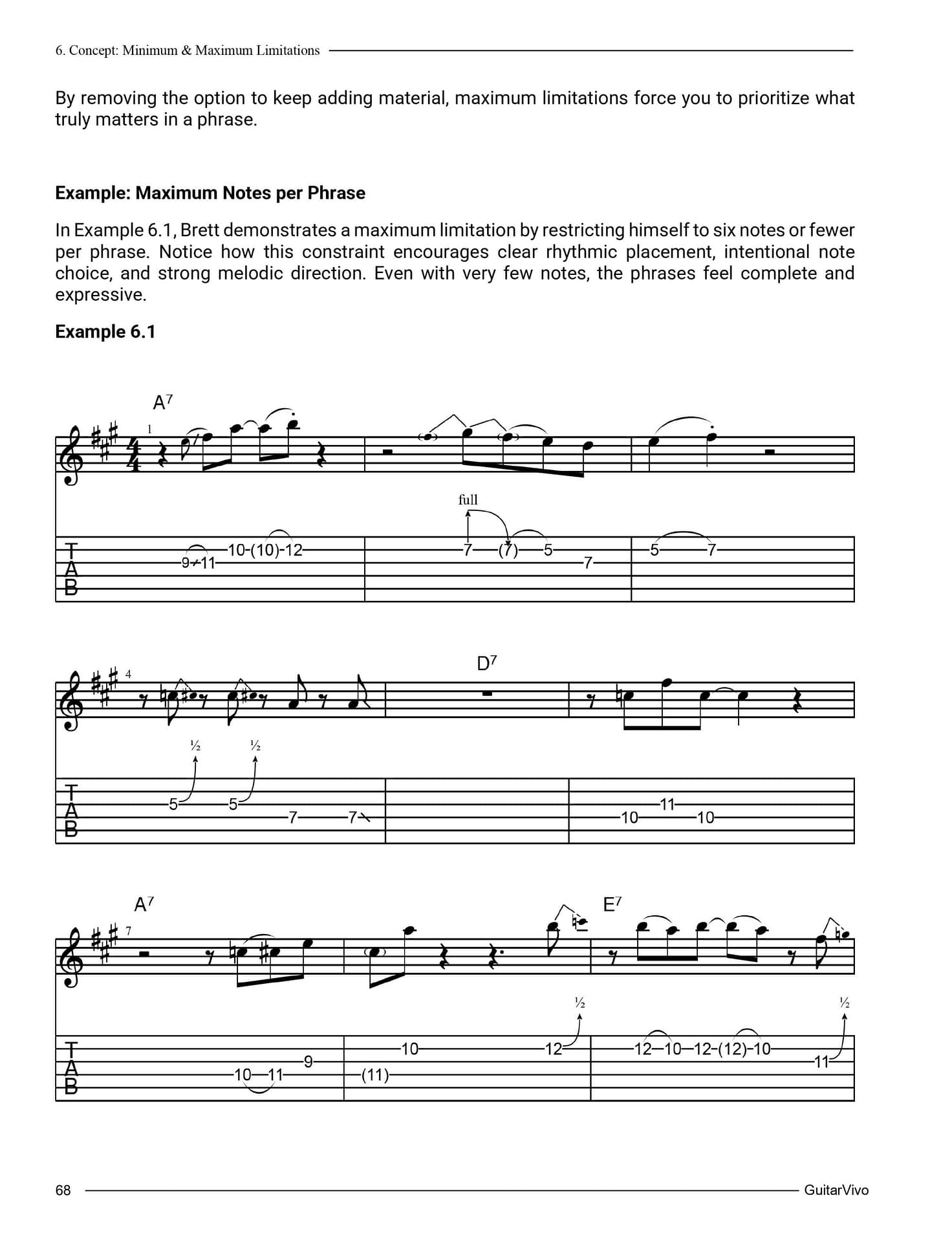
Minimum and maximum limitations introduce upper and lower boundaries rather than fixed rules. You'll learn how to control phrase length, note density, rhythmic activity, and intensity. These exercises are especially useful for correcting overplaying or underplaying tendencies. By working within flexible limits, you'll develop better pacing, balance, and awareness of how much musical information is truly needed.
This chapter focuses on gradual change over time. Expanding limitations teach you how to grow ideas without losing focus, while shrinking limitations help you taper intensity and create resolution. You'll learn how to systematically add or remove options to shape long-form solos, endings, and transitions. These tools are invaluable for learning control, contrast, and musical direction.
Rhythm is one of the most overlooked areas of guitar practice. This chapter develops rhythmic accuracy, vocabulary, and feel through focused limitations. You'll work with subdivisions, syncopation, play-rest ratios, phrase placement, and rhythmic interaction. These exercises help you lock in with grooves, create stronger rhythmic identity, and contribute more meaningfully in ensemble settings.
Strong phrases begin and end with intention. Takeoff and target limitations train you to plan phrase direction by controlling starting points and destinations. You'll explore constraints involving notes, fingers, strings, beats, techniques, and registers. These exercises dramatically improve phrasing, voice leading, and harmonic awareness, helping your lines sound purposeful rather than accidental.
This chapter zooms out to the shape and structure of musical ideas. You'll explore phrase length, density, contour, call-and-response, motivic development, and formal structures. By learning to think in complete musical sentences, you'll move away from stringing together licks and toward expressive, narrative-driven improvisation that sounds composed and confident.
Feature and checkbox limitations help you integrate new ideas into real music. Instead of isolating concepts, you'll learn how to require specific elements to appear naturally within phrases, solos, or entire performances. These exercises are ideal for transitioning ideas from the practice room into your personal style and ensuring long-term retention.
Sometimes progress comes from removing options rather than adding them. This chapter explores how avoiding techniques, fingers, positions, or habits can unlock unexpected creativity. You'll learn how many great players developed their voice by leaning into constraints, disadvantages, or omissions, and how doing less can often lead to more distinctive musical results.
Voice leading limitations focus on how notes move between chords. You'll explore constraints that encourage stepwise motion, sustained common tones, and controlled harmonic movement. These exercises deepen your understanding of harmony, improve comping clarity, and help your lines connect smoothly across changes with a more pianistic, musical approach.
This chapter shows how limitation exercises can simplify one of the most challenging aspects of improvisation: following chord changes. By targeting specific notes, connections, and transitions, you'll learn how great players internalize harmony without overwhelming complexity. These tools apply to jazz, blues, rock, and beyond, wherever chords move and music evolves.
Practice doesn't always prepare you for the pressure of real situations. This chapter introduces limitations designed to simulate performance, recording, and live-playing constraints. You'll work with reduced takes, unfamiliar material, tonal restrictions, and physical challenges. These exercises build adaptability, confidence, and reliable decision-making when it matters most.
Trigger limitations activate only when specific musical events occur. You'll learn how to attach limitations to chords, rhythms, registers, or ensemble cues. This approach helps integrate new material into real playing more quickly by switching between freedom and constraint in context, accelerating the transition from practice concepts to musical instinct.
The final chapter shifts focus from playing to listening. You'll explore limitations that train your ear, awareness, and musical sensitivity while listening to recordings. By narrowing your attention to specific elements, instruments, or relationships, you'll develop deeper musical insight that directly feeds back into your playing and creative decision-making.
The conclusion ties everything together and emphasizes self-reliance. Rather than mastering a fixed list of exercises, you'll learn how to create your own limitations based on your goals and weaknesses. This chapter reinforces the idea that limitation exercises are a lifelong framework for growth, creativity, and musical problem-solving.
"Limitation exercises have been a secret weapon for musicians, artists, and writers for longer than we could ever know. They give you a prompt, a restraint, or a goal — and force you to work within it to create and express yourself."
Luke Lewis · Author, Limitation Exercises for Guitar
COMMON QUESTIONS
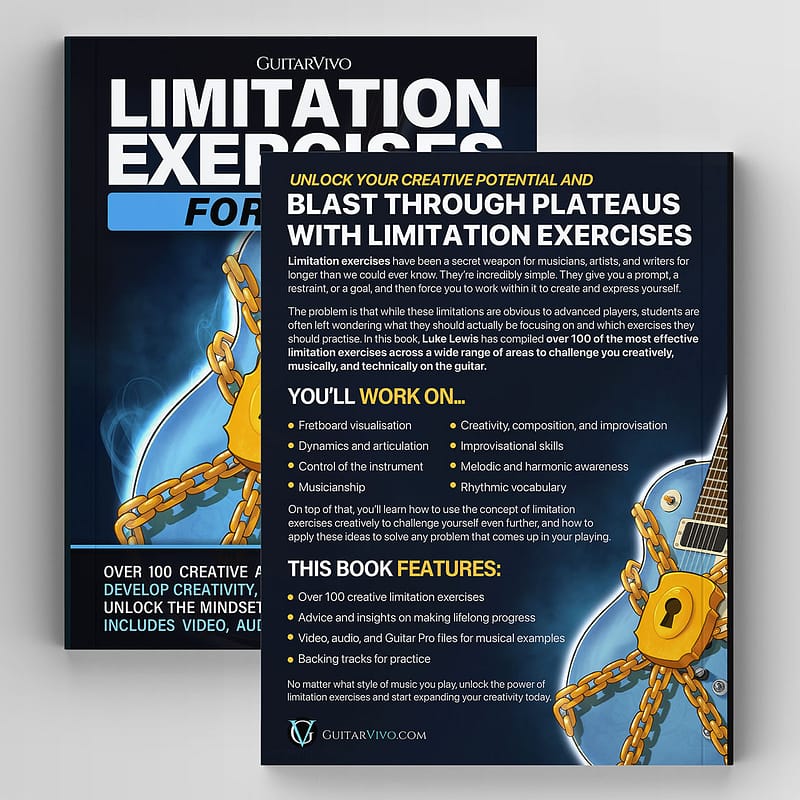
Limitation exercises have been a secret weapon for musicians, artists, and writers for longer than we could ever know. They’re incredibly simple. They give you a prompt, a restraint, or a goal, and then force you to work within it to create and express yourself. The problem is that while these limitations are obvious to advanced players, students are often left wondering what they should actually be focusing on and which exercises they should practice. In this book, Luke Lewis has compiled over 100 of the most effective limitation exercises across a wide range of areas to challenge you creatively, musically, and technically on the guitar.
This guide is designed for intermediate to advanced guitarists who have some familiarity with lead playing but want to expand their vocabulary and creative approach to soloing. The progressive structure ensures a clear path from foundational concepts to more complex techniques.
Yes, both the digital and physical versions of the book include access to a complete set of supplemental materials. This includes all audio, video masterclasses (over 6 hours!), and Guitar Pro files for every example, lick, and solo, making it a complete multimedia course.
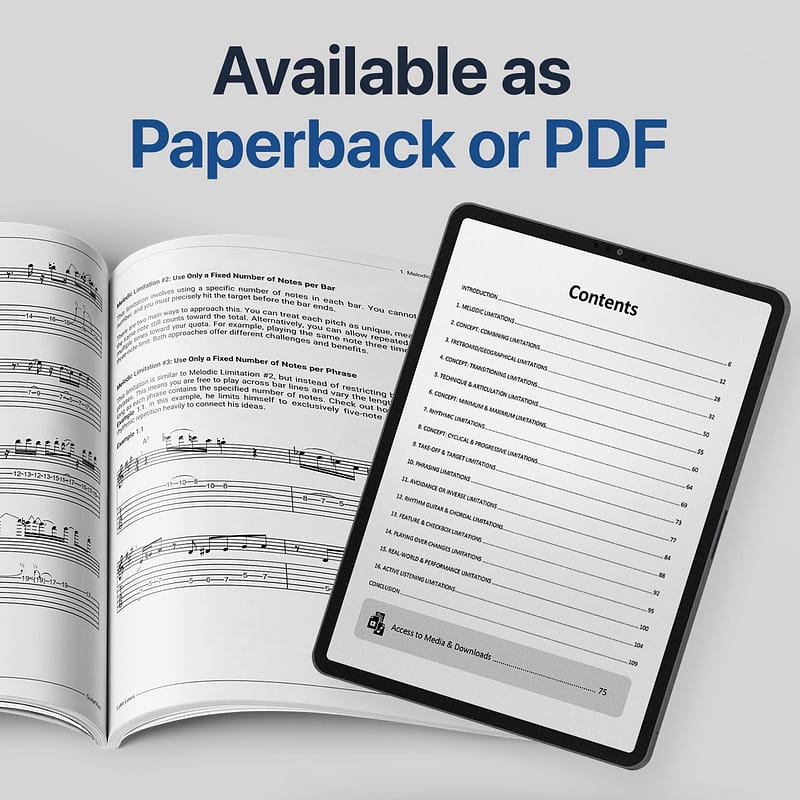
The primary difference is the format. The PDF is a digital-only version that you can view on any device. The paperback is a physical, printed book. Both versions include identical content and grant you the exact same access to all accompanying audio, video, and Guitar Pro files.
Instructions for accessing all bonus content and media files are provided inside the book. You’ll find a URL that directs you to a private, members-only page where you can download or stream all the included resources.
MORE FROM GUITARVIVO
Start today
100+ exercises · HD video & audio · Tab & notation · Guitar Pro files
No account yet?
Create an Account